Wasp or hornet nest: when to remove it, and how
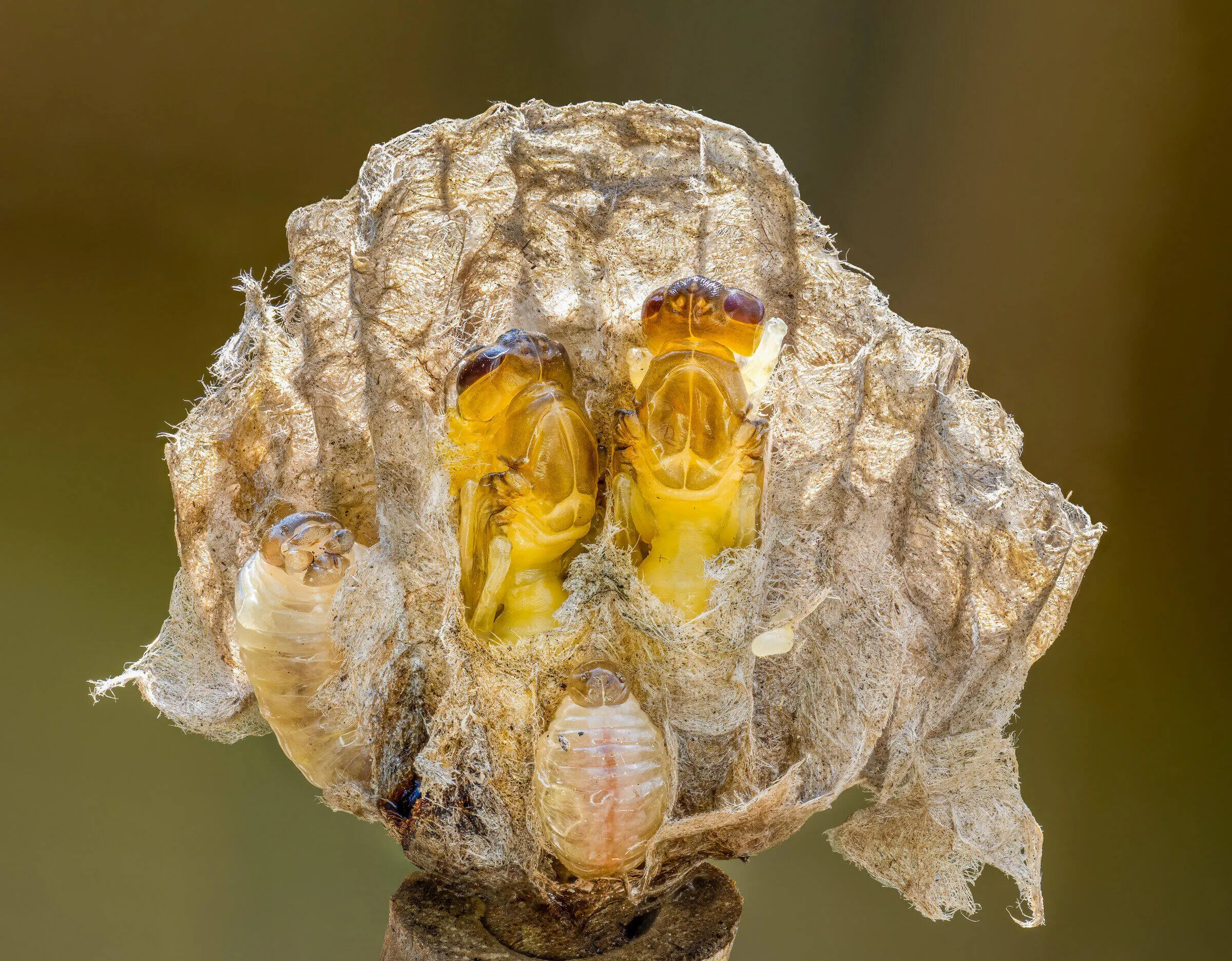

A wasp nest starts in spring with a single queen and a few cells, about the size of a golf ball. By August it can hold several thousand workers defending the colony. On the South Shore, nests often settle in the vented soffits and behind the siding of newer homes in Chambly, Saint-Constant or Candiac, and in the ground under lawns.
Identifying the species
Three groups cause almost all the trouble:
- yellowjackets, 10 to 16 mm, bright yellow and black. They nest in walls, soffits or the ground, and they are the most aggressive;
- the bald-faced hornet, 15 to 20 mm, black and white. It builds a large grey, balloon-shaped nest in a tree, a shrub or under an eave;
- paper wasps, brown and yellow, with long legs dangling in flight. Their open, umbrella-shaped nest hangs under a deck or a ledge. They are calmer.
Do not confuse them with the honey bee, hairy and golden brown, or the bumblebee. Those are relocated when possible, never exterminated.
Signs of a nest
- a steady stream of wasps through the same hole in siding or a soffit;
- a grey paper nest under an eave, a deck or in a shrub;
- scratching or buzzing inside a wall or ceiling, especially in hot weather;
- wasps indoors with no window open, a sign of a nest in the structure;
- wasps coming out of a hole in the lawn or a flower bed.
Why act, and when
A wasp can sting more than once, and a disturbed colony attacks in numbers. For someone allergic, a single sting can cause a serious reaction. The risk depends on location: a nest above a door, next to a play structure or in a lawn mowed every week is nothing like a nest high up at the back of the yard.
Timing matters too. A small nest spotted in June is dealt with quickly. The same nest in September is bigger, more defensive and takes longer to treat. On the other hand, a nest found in November is already empty: there is nothing left to exterminate.
How treatment works
- Identifying the species and location. Aerial nest, inside a wall, in a soffit or in the ground: the method, the equipment and the price change.
- Assessing the risk. Proximity to a door, children or someone allergic; access at height.
- Treatment. The product, usually an insecticide dust or aerosol, is applied directly into the nest entrance or the nest itself, often late in the day when the workers are back inside.
- Removing the nest when it is accessible, for example under a deck or in a shrub. A nest inside a wall is left in place once the colony is gone.
- Checking. Activity should stop within a day or two. The entrance hole is only sealed at that point.
What it costs on the South Shore
For an accessible nest, visible and within ladder reach, ranges published in the region run $150–$400. For a nest inside a soffit, a wall, under a deck or up high, prices published for Montreal run $210–$630. The gap comes almost entirely from access. Sources are detailed on the pest control prices page.
The CD5 certificate and nests up high
An insecticide applied inside a soffit or a wall is still a pesticide application, and whoever applies it must hold a CD5 certificate from the Ministry of the Environment. Ask to see it. Also have the quote state whether nest removal is included, and what happens if activity picks up again in the following days.
Preventing wasp nests
- Check the outside of the house in May and June: soffits, under the deck, the shed, play structures. A queen’s starter nest is easy to remove then.
- Fix loose soffit vents and holes in the siding.
- Keep garbage and compost bins closed, especially late in summer.
- Do not leave sweet drinks open outdoors in August and September.
- Pick up fallen fruit under fruit trees.
An active nest above a door or near someone allergic justifies acting fast: see what to do in an emergency. Honey bees and bumblebees, on the other hand, are relocated when possible, often with help from a local beekeeper, rather than exterminated.
Frequently asked questions
Can an empty nest be reused in winter?
No. The colony dies in the fall; only the future queens overwinter, elsewhere, and they build a new nest in spring. An empty nest can be removed without any rush, even if it is large.
Why should I never plug the hole of a nest inside a wall?
Because trapped wasps look for another way out, and sometimes find one indoors: through an electrical box, a light fixture or a baseboard. The hole is only sealed once the colony is gone.
Is it a bee or a wasp?
A honey bee is hairy, golden brown, and visits flowers. A wasp is smooth, bright yellow and black, and goes after sugar and protein, around garbage and picnic tables. Honey bees and bumblebees are relocated when possible, never exterminated.
How long after treatment do the wasps disappear?
Activity usually drops sharply within hours and most often stops within a day or two. Wasps returning from foraging may keep circling the entrance for a while.
What if someone allergic gets stung?
Call 911 at the first signs of a whole-body reaction: trouble breathing, swelling of the face or throat, dizziness. If the person has an epinephrine auto-injector, use it right away. For a sting without a general reaction, Info-Santé 811 can advise you.
Why are wasps more aggressive at the end of summer?
In August and September the colony is at its largest and is defending a nest full of larvae. At the same time, the workers are looking for more sugar. It is the peak period for stings.
Can I hose down the nest or use soapy water?
Not recommended. Soaking a live nest triggers a mass, defensive exit and does not kill the colony inside the cells. For a nest inside a wall, it does nothing.
Is a nest in the lawn dangerous?
Yes, especially when mowing. Ground-nesting yellowjackets react to vibration. Mark the entrance, keep children and pets away, and do not run the mower nearby until the nest has been treated.
This pest in commercial settings
Where this pest is most common
Towns in the territory where this pest puts the most pressure, based on each town’s housing and surroundings.
High pressure
Next steps
Related pests
Updated