Exterminator in Saint-Hyacinthe

What the most common treatments cost in Saint-Hyacinthe
Ranges published by companies in the region, not prices set by this site. The only figure that binds is a written quote after an inspection.
- mice — Mice, residential$250–$695 per job
- rats — Residential rodent treatment$250–$695 per job
- wasps and hornets — Accessible nest$150–$400 per job
Saint-Hyacinthe had 57,239 residents at the 2021 census. It is the seat of Les Maskoutains RCM and calls itself the Technopole agroalimentaire du Canada, Canada’s agri-food technology hub. The Yamaska River runs through it from south to north, Autoroute 20 crosses it east to west, and the Delorme River joins the Yamaska from the east. All around it are fields.
A town in the middle of farmland
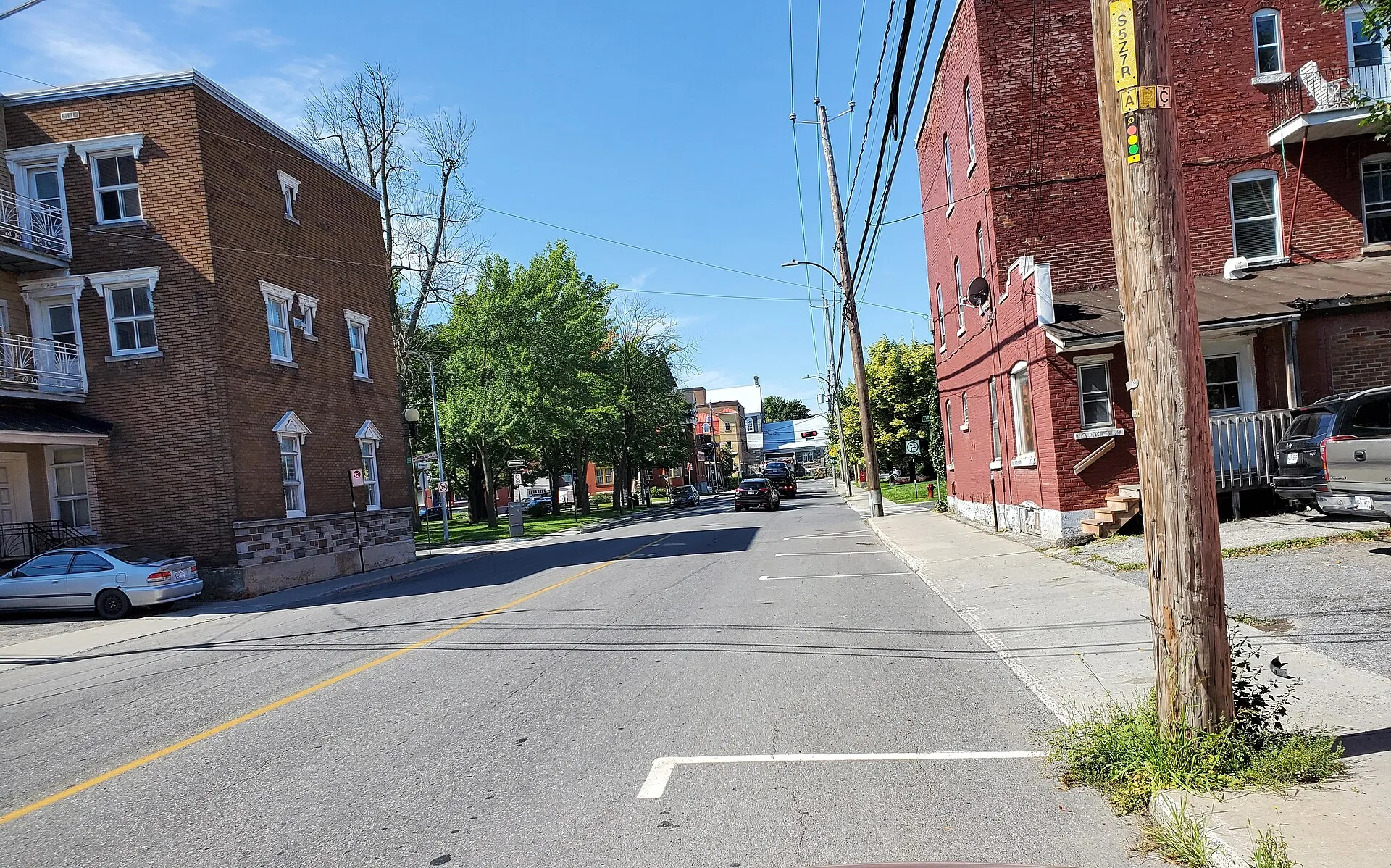
The shape of the town explains its pests. Downtown, around rue Saint-Pierre Ouest, avenue Pratte and rue Dessaulles, is made of tightly packed brick buildings, many rebuilt after the great fire of 1876. Around it, the areas annexed in 1976, such as Douville, La Providence and Saint-Joseph, add postwar bungalows. Farther out, Sainte-Rosalie and Saint-Thomas-d’Aquin, merged in 2001, are still country roads with houses standing alone between the fields.
Few towns this size have such a sharp line between built-up streets and open fields. That line is where most rodent problems start.
The most common pests in Saint-Hyacinthe
Mice. The number one pest. In the fall, harvest and ploughing strip the cover from the fields, and mice look for shelter in the first building they reach. Farmhouses and the neighbourhoods on the edge of the farm zone are hit first; downtown buildings keep them longer because of their shared walls. See mice in Saint-Hyacinthe.
Rats. The Norway rat lives near water and food. The banks of the Yamaska River, the back lots of old commercial buildings and the farm buildings around town all suit it. See rats in Saint-Hyacinthe.
Raccoons and skunks. They settle under decks, in sheds and in attics. In Saint-Hyacinthe, raccoon rabies changes how the problem is handled: see the section below.
Asian lady beetles. Soybean fields are their summer habitat. In October they gather on sunny walls, especially on the edge of the fields. See Asian lady beetles.
Wasps. Soffits, decks and sheds host wasp nests from June to September.
Raccoon rabies in Saint-Hyacinthe
Raccoon rabies cases were confirmed in Saint-Hyacinthe in June 2026, according to the Québec government’s case table. The town is on the list of municipalities where moving or relocating a live raccoon, striped skunk, fox or coyote is prohibited. The ban runs until December 6, 2026 and may be extended.
In practice, trapping an animal and releasing it elsewhere is not allowed. What remains is exclusion: sealing the way in under the deck or into the attic, with a one-way door that lets the animal out but not back in, outside the period when a female may have young inside. Details are on the raccoons page. An animal that is injured, aggressive or seems disoriented should be reported to the Québec government (Québec.ca/rageduratonlaveur page); do not touch it.
What the municipal by-law says
Section 5.1 of the City of Saint-Hyacinthe’s By-law 290 on the occupancy and maintenance of buildings is plain: any condition likely to attract insects, vermin or rodents must be removed, and an infested building must be treated within the deadline set by the designated officer. The May 2025 consolidation (by-law 761) added mould.
For a tenant, this is real leverage: report the problem to the owner in writing first, then, if nothing happens, to the City, which can set a deadline. For a building owner, the obligation covers the whole building, not just the unit that complained.
The local calendar
- April to June: raccoons and skunks looking for a place to give birth.
- June to September: wasps; rats more visible near the river.
- October and November: mice after the harvest, Asian lady beetles on walls.
- Winter: mice already inside, active in walls and basements.
Requesting service in Saint-Hyacinthe
Saint-Hyacinthe forms the Les Maskoutains RCM zone. The quote request for Saint-Hyacinthe opens with the town already selected. Availability is confirmed when you send a request.
Mention whether your house backs onto a field or the river, and whether you live in a multi-unit building. Ask for a written quote, ask to see the CD5 certificate of the technician who will apply any pesticide, and check the price ranges on the pricing page.
The most common pests in this sector
Frequently asked questions
Why do mice show up in October in Saint-Hyacinthe?
Because the town is surrounded by fields. When the corn and soybeans are harvested and the land is ploughed, mice lose their cover and their food at once. They fall back on the nearest buildings: farmhouses in Sainte-Rosalie or Saint-Thomas-d'Aquin first, then the neighbourhoods on the edge of the farm zone.
Does my landlord have to deal with an infestation?
Yes. Section 5.1 of the City of Saint-Hyacinthe's By-law 290 requires owners to remove any condition that attracts insects, vermin or rodents, and to treat an infested building within the deadline set by the municipal inspector. The Civil Code also requires a landlord to provide a dwelling in good habitable condition.
Can a raccoon be trapped and released somewhere else?
Not at the moment. Saint-Hyacinthe is on the list of municipalities where moving a live raccoon, skunk, fox or coyote is prohibited because of raccoon rabies. The ban runs until December 6, 2026 and may be extended. The answer is to keep the animal out, not to move it.
Have there been rabies cases in Saint-Hyacinthe?
Yes. The Québec government's case table lists rabid raccoons in Saint-Hyacinthe in June 2026, along with a skunk. Never touch a wild animal that is injured or acting strangely; report it to the Québec government, by phone or online, from the Québec.ca/rageduratonlaveur page.
Do the downtown brick buildings have more pests?
Mostly, they have more pathways. In a two- or three-unit building attached to its neighbours, a mouse moves from one unit to the next through the walls and utility entries. Treating a single unit rarely holds: the whole building needs an inspection.
Is Saint-Hyacinthe really served?
Saint-Hyacinthe forms its own zone, Les Maskoutains RCM, added to the territory in November 2026. Availability is confirmed when you send a request and is never guaranteed in advance.
Updated