Bumblebee nest or honey bee swarm: what to do without killing them
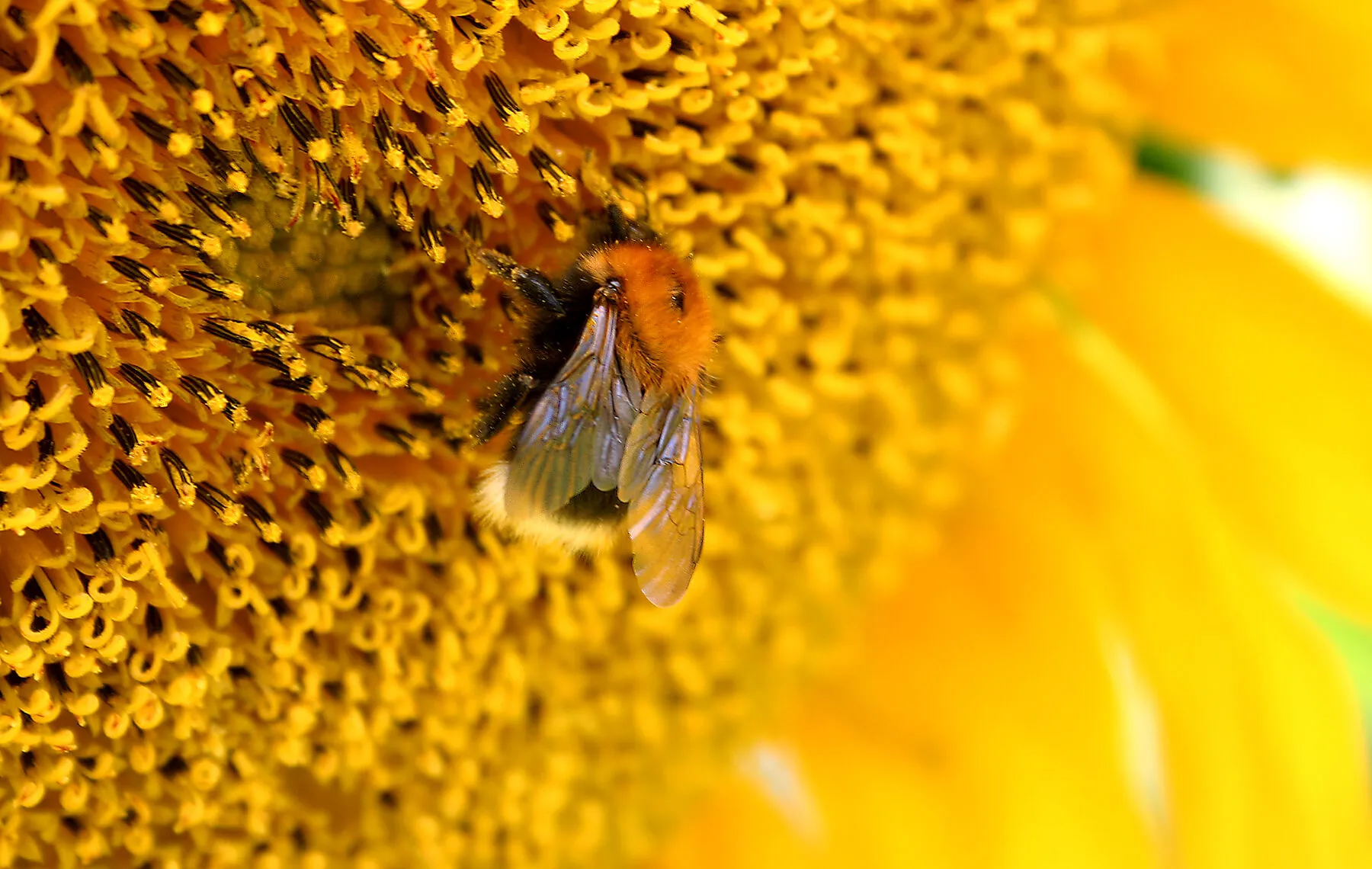

A bumblebee nest in the lawn or a honey bee swarm hanging from a branch almost never needs an exterminator. Bumblebees and honey bees pollinate gardens and crops. A bumblebee nest dies on its own in the fall, and a honey bee swarm can often be collected by a beekeeper. The first step is making sure you are dealing with bees or bumblebees, not wasps.
Bee, bumblebee or wasp?
| Bumblebee | Honey bee | Yellowjacket | |
|---|---|---|---|
| Look | large, very hairy | golden brown, hairy | smooth, bright yellow and black |
| Nest | ground, rock garden, old bird nest, insulation | hive, tree or wall cavity | grey paper, ground or eaves |
| Behaviour | slow, peaceful away from the nest | peaceful when swarming | drawn to food and garbage |
| Nest lifespan | one season | several years | one season |
If the insect is circling your sugary drinks and garbage, it is a wasp: see the page on wasps and hornets. A mimic, the hover fly, also looks like a small wasp, but it hovers in place and does not sting.
A bumblebee nest: waiting is often enough
A bumblebee colony lasts one season. In spring, a lone queen founds the nest, often in an old rodent hole, under a deck, in a rock garden or an old bird nest. The colony grows all summer, then produces new queens. These leave to overwinter alone, and the rest of the colony dies with the first frosts. The nest is not reused.
Away from foot traffic, a bumblebee nest can simply be left alone and worked around until fall. Mow around it rather than over it, and close the opening only once no bumblebees are going in.
A honey bee swarm: call a beekeeper
In spring and early summer, a honey bee colony splits: half leaves the hive with the old queen and clusters on a branch, fence or wall while scouts find a new home. The cluster is generally not aggressive. Keep your distance and contact a local beekeeper quickly: a swarm collected within hours becomes a new hive. A swarm left in place may move into a wall or chimney.
A colony in a wall: the hard case
A honey bee colony inside a wall builds wax comb and stores honey. Killing the bees without removing the comb leaves honey that melts, stains the drywall and attracts other insects and rodents. Removal means opening the wall, often by a beekeeper working with a contractor, then sealing the entry gap.
When to act quickly
- someone allergic lives in the house or uses the yard;
- the nest is next to a door, play structure, pool or daycare;
- children or a dog have already disturbed it.
In those cases, relocation is still better when possible. Otherwise, professional treatment is justified. For facilities that care for children, allowed products are limited: see the page on daycares and schools. For multiple stings or an allergic reaction, call 911.
What it costs
No price is given here, on purpose: a swarm is often collected free or at low cost by a beekeeper, and a bumblebee nest is usually left to die off in the fall. Removing a colony from a wall is mostly a repair bill. Published ranges for other insects are on the pricing page.
Preventing a colony from moving in
Seal siding gaps, joist holes and chimney openings in spring, before swarm season. Screen vents and cap the chimney. The most flower-filled parts of the service area, with big gardens and riverside strips, see more bumblebees: that is good news for the garden, not a problem to fix.
Frequently asked questions
How can I tell a bee, a bumblebee and a wasp apart?
Bumblebees are large, very hairy and slow. Honey bees are golden brown and hairy. Wasps are smooth, bright yellow and black, with a very narrow waist, and are drawn to sweets and meat. If the insect is hanging around your garbage and your meals, it is almost always a wasp.
Does a bumblebee nest die off on its own?
Yes. A bumblebee colony lasts a single season. At the end of summer, new queens mate and leave to overwinter alone, and the rest of the colony dies with the first frosts. The nest is not reused the following year.
A honey bee swarm landed on a tree. Is it dangerous?
A clustered swarm is generally not aggressive: the bees have no brood to defend and are waiting for scouts to find a new home. Leave it alone and keep children and pets away. A local beekeeper can often collect it, ideally within hours.
Bees got into a wall. What now?
Act before the colony builds comb. A colony inside a wall has to be removed together with its comb, often by a beekeeper working with a contractor, because honey left behind melts, stains and attracts other insects. Killing the bees without removing the comb creates exactly that problem.
What if someone in the house is allergic?
That changes things. If a nest is near a door, a play structure or somewhere the person passes every day, act quickly: relocate if possible, otherwise bring in a professional. Keep the epinephrine auto-injector at hand and follow the doctor's advice.
Can a pest control company spray a bumblebee nest?
Technically yes, but it is rarely justified: bumblebees pollinate gardens and crops, the nest dies in the fall, and a bumblebee seldom stings unless its nest is disturbed. Save treatment for nests that pose a real risk.
Next steps
Other nuisance wildlife
Official sources
The legal texts and government pages cited on this page. Always check them for the current version.
Updated