Exterminator in Saint-Bruno-de-Montarville

What the most common treatments cost in Saint-Bruno-de-Montarville
Ranges published by companies in the region, not prices set by this site. The only figure that binds is a written quote after an inspection.
- carpenter ants — Accessible colony$300–$800 per job
- wasps and hornets — Accessible nest$150–$400 per job
- mice — Mice, residential$250–$695 per job
See every published range, including Saint-Bruno-de-Montarville
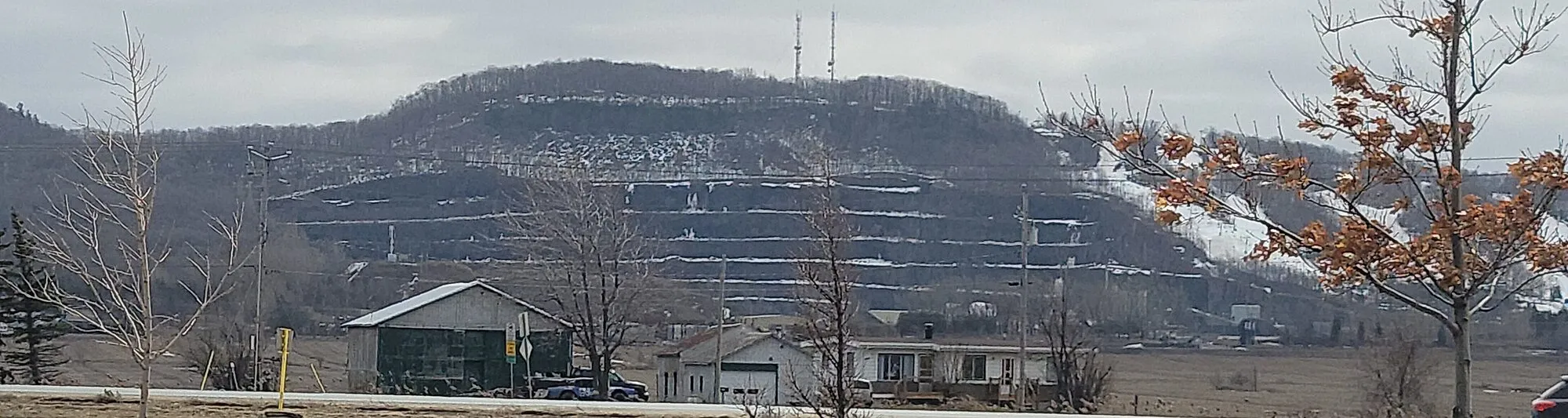
Saint-Bruno-de-Montarville has 26,273 residents as of the 2021 census. The town sits on the south-west flank of mont Saint-Bruno, one of the Monteregian Hills, and its walking and cross-country ski trails wind through the parc national du Mont-Saint-Bruno. City hall is on rue Montarville, the library on boulevard Seigneurial, and the village core is organized around lac du Village. Autoroute 30 meets route 116, boulevard Sir-Wilfrid-Laurier, near the Promenades Saint-Bruno.
A town backing onto the forest
Few South Shore towns have the forest this close to homes. Several neighbourhoods border the mountain and the national park: dead wood, stumps, large trees and moisture are a few steps from the foundations. That proximity, more than the age of the houses, explains the town’s pest profile.
The most common pests in Saint-Bruno-de-Montarville
Carpenter ants. The town’s signature pest. The main colony settles in the dead wood of the forest, then sends satellite nests into nearby houses: see carpenter ants and the post on why the mountain draws carpenter ants.
Wasps. Large lots, trees and sheds multiply the sites for wasp nests, on top of soffits.
Mice. Houses next to the woods also get mice in the fall.
Asian lady beetles. Sunny walls facing open space attract Asian lady beetles.
Ticks. Not an extermination problem in the usual sense, but a real issue near trails and wooded areas.
The local calendar
- April to June: carpenter ants; the start of tick season on the trails.
- June to September: wasps, mosquitoes near Lac du Village.
- September to November: mice and Asian lady beetles.
- Winter: mice already inside.
The work and the timing
In Saint-Bruno-de-Montarville, the inspection starts in the yard: stumps, stacked wood, dead trees, fences, before the house’s own wood. Treatment targets the nests found, and repairs target the cause: rotten wood, branches on the roof, gutters. A follow-up visit confirms activity has ended. No timeline is guaranteed here.
Requesting service in Saint-Bruno-de-Montarville
Saint-Bruno-de-Montarville is part of the Longueuil agglomeration zone. The quote request for Saint-Bruno-de-Montarville opens with the town already selected. No response time is guaranteed. Say whether your lot borders the woods.
Insist on a written quote that treats the main nest, not just the inside, and ask to see the technician’s CD5 certificate. Price ranges are on the price ranges page. Neighbouring Saint-Hubert has its own profile.
The most common pests in this sector
Frequently asked questions
Why does Saint-Bruno have so many carpenter ants?
The town backs onto Mont Saint-Bruno and the national park. Several neighbourhoods have forest, dead wood and stumps a few steps from the houses, which feeds carpenter ant colonies. The main nest is often in the woods, and a satellite nest settles in the house.
Are there ticks near Mont-Saint-Bruno National Park?
Wooded areas in Montérégie are habitat for the black-legged tick, which public health monitors closely. After a walk on the trails, check yourself, your children and your pets, and clear vegetation around the yard.
Why are wasps so common here?
Large lots, trees, sheds and decks offer plenty of nest sites, on top of soffits. A spring inspection lets you remove a young nest before it grows.
Do homes near Lac du Village have particular problems?
Moisture near the water favours carpenter ants in exterior wood and mosquitoes in summer. Clean gutters and firewood kept away from the house reduce the risk.
Is the carpenter ant nest always inside the house?
Often not. Backing onto the national park, the main colony may live in a stump or dead tree in the woods and send only a satellite nest into the house. That is why a quote should say where the nest was looked for, outside as well as inside.
What should I do about ticks after a walk in the national park?
Check yourself when you get back, especially behind the knees, in the groin and at the hairline. An attached tick is removed with fine tweezers, then you call Info-Santé 811. That is a health reflex, not an extermination treatment.
Neighbouring sectors
Updated