Cockroaches in an apartment: why one unit is never enough
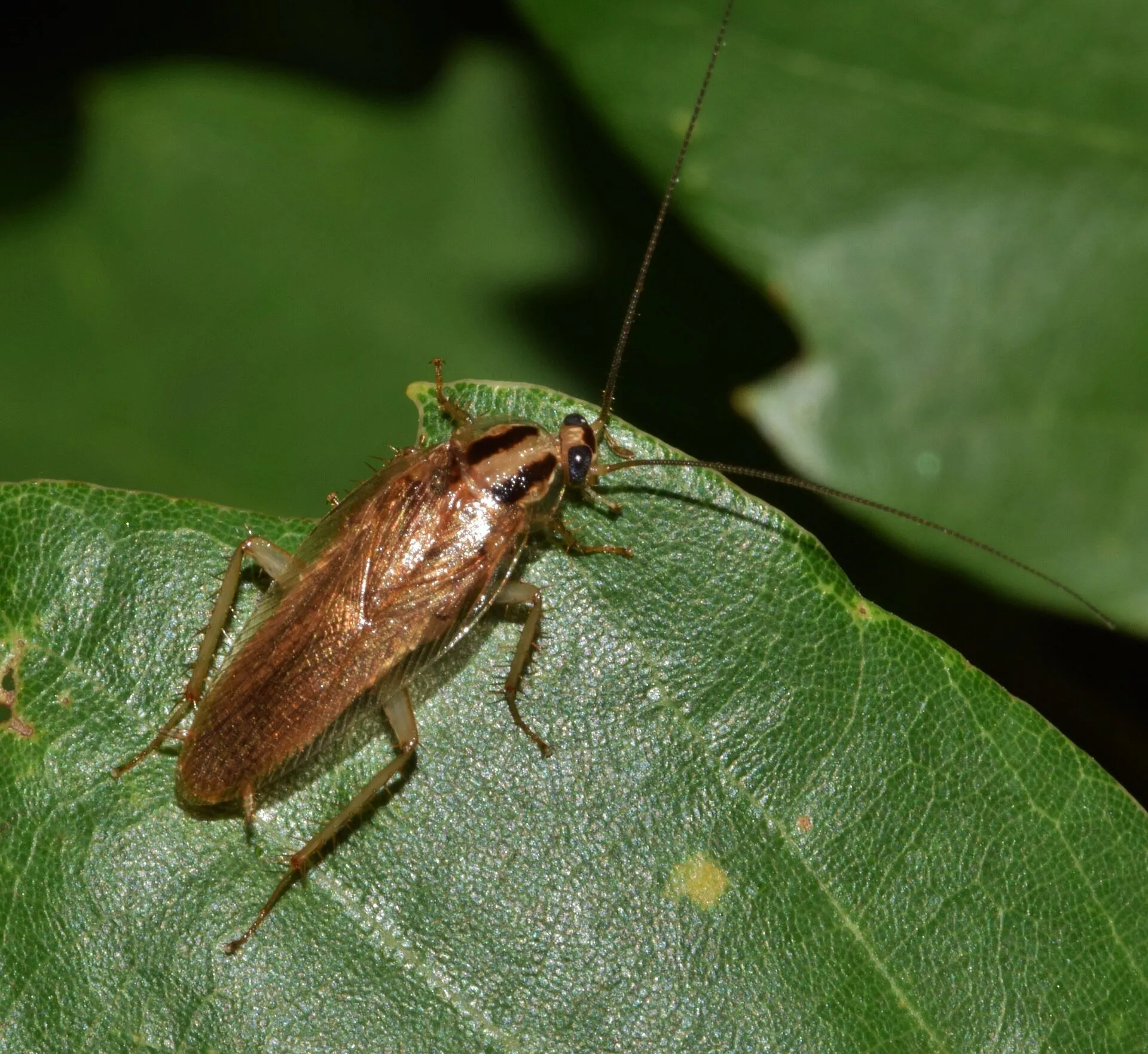
Almost every cockroach found in South Shore apartments is a German cockroach. It does not live outdoors in Quebec: it depends entirely on a building’s heat, water and food. In a Longueuil or Brossard apartment building, it moves from kitchen to kitchen through ducts and shared walls, and that is what makes most treatments fail.
Identifying the German cockroach
The adult measures 12 to 16 mm. It is light brown, with two dark parallel stripes just behind the head, long antennae and spiny legs. Nymphs, 3 to 10 mm, are darker and wingless. The female carries a brown, oblong egg case until it hatches.
Not to be confused with:
- the Oriental cockroach, larger and black, which prefers damp basements and drains;
- a bed bug, smaller, oval and flat, with no long antennae;
- a cricket, recognizable by its jumping hind legs.
Signs of an infestation
- cockroaches scattering when the kitchen light goes on at night;
- small black droppings, like ground pepper, in cupboards and drawers;
- brown egg cases near the sink, dishwasher or fridge;
- shed skins and dead insects under appliances;
- an oily smell in a heavy infestation;
- cockroaches out in daylight: the population is already large and running out of hiding places.
The hot spots are always the same: the fridge motor, under the dishwasher, the cabinet under the sink, the microwave and the stove.
Why act without waiting
A German cockroach egg case holds several dozen eggs, and nymphs reach adulthood in a few weeks in a heated kitchen. A population can grow very fast.
The risks are well documented: contaminated food and surfaces, and allergens in droppings and shed skins that are associated with asthma in children. In a food business, a confirmed presence can also cause problems at inspection.
How treatment works
- Inspecting the unit and its neighbours. In a building, the inspection covers at least the units on each side, above and below the one that complained.
- Assessment. Size of the population, hot spots, routes between units.
- Preparation. Grease and crumbs cleaned up, kitchen cabinets partly emptied, food stored in sealed containers.
- Treatment. Gel baits placed in cracks and hot spots, often combined with an insect growth regulator that keeps nymphs from reaching adulthood. Repellent products are avoided, because they scatter the population instead of drawing it to the baits.
- Sealing. Gaps around pipes, ducts and outlets between units.
- Follow-up. Two or three spaced visits, with sticky monitors to measure the drop in activity.
What it costs
For a light infestation, a Québec generalist publishes an average cost of about $250, and about $350 for a standard spray treatment. For a heavy infestation needing several visits and often treatment of neighbouring units, the same source says the price can reach $1,500. No more local range is published for the South Shore. Sources are detailed on the pricing page.
The CD5 certificate in a kitchen
Gels and growth regulators are pesticides applied where you prepare food. In Quebec, the person applying them must hold a CD5 certificate from the Ministry of the Environment. Ask to see it, ask where the gels are placed, and have the quote state in writing what not to clean in the following days: washing away a gel bait makes it useless.
Keeping cockroaches from coming back
- Leave nothing to eat overnight: dirty dishes, crumbs, the pet’s bowl, an open garbage can.
- Fix leaks under the sink: water matters as much as food.
- Inspect second-hand boxes and appliances before bringing them into the home.
- Seal the gaps around pipes and outlets, especially on shared walls.
- Tell the landlord quickly: in a building, waiting gives cockroaches time to settle next door.
A restaurant, daycare or senior residence needs a documented program: see the commercial section. For rights and obligations in rental housing, see the frequently asked questions.
Frequently asked questions
I saw one cockroach. Is it an infestation?
Not necessarily, but keep watching. A cockroach can arrive in a grocery box or a carton. If you see more, especially small nymphs, or find droppings or egg cases, the population is already established.
Do cockroaches come from the neighbours?
Often, in an apartment building. They move through ducts, pipes, electrical outlets and shared walls. That is why treating only the unit that complained so often fails: the population comes back through the walls.
Are bug bombs a good idea?
No. They kill few hidden cockroaches, contaminate kitchen surfaces and push survivors into the walls and neighbouring units. They also make gel baits less effective, because the insects avoid treated areas.
Does boric acid work?
It can have a partial effect on a small population, if applied as a very thin dust where cockroaches travel and away from children and pets. It does not solve an established infestation in a building.
Are cockroaches a health hazard?
They contaminate food and surfaces, and their droppings and shed skins contain allergens associated with asthma, especially in children. That is the main reason not to let an infestation settle in.
How long does it take to get rid of them?
It usually takes several weeks and two or three visits, because eggs protected inside their cases hatch after the first treatment. A clear drop in activity is often visible within the first weeks.
Why do they come back after treatment?
Three causes almost always explain it: neighbouring units were not treated, food and crumbs remain available, or the follow-up was skipped. A serious quote addresses all three.
Who pays for cockroach control in an apartment building?
In Quebec, the landlord must keep the units in good habitable condition, and a problem affecting several units falls in practice to the building owner. The tenant must notify the landlord promptly and cooperate with preparation. If there is a disagreement, the Tribunal administratif du logement can be involved.
This pest in commercial settings
Where this pest is most common
Towns in the territory where this pest puts the most pressure, based on each town’s housing and surroundings.
High pressure
Next steps
Related pests
- bed bugs
- pantry moths and carpet beetles
- silverfish
Official sources
The legal texts and government pages cited on this page. Always check them for the current version.
Updated