Flies in the house: find the source before you treat
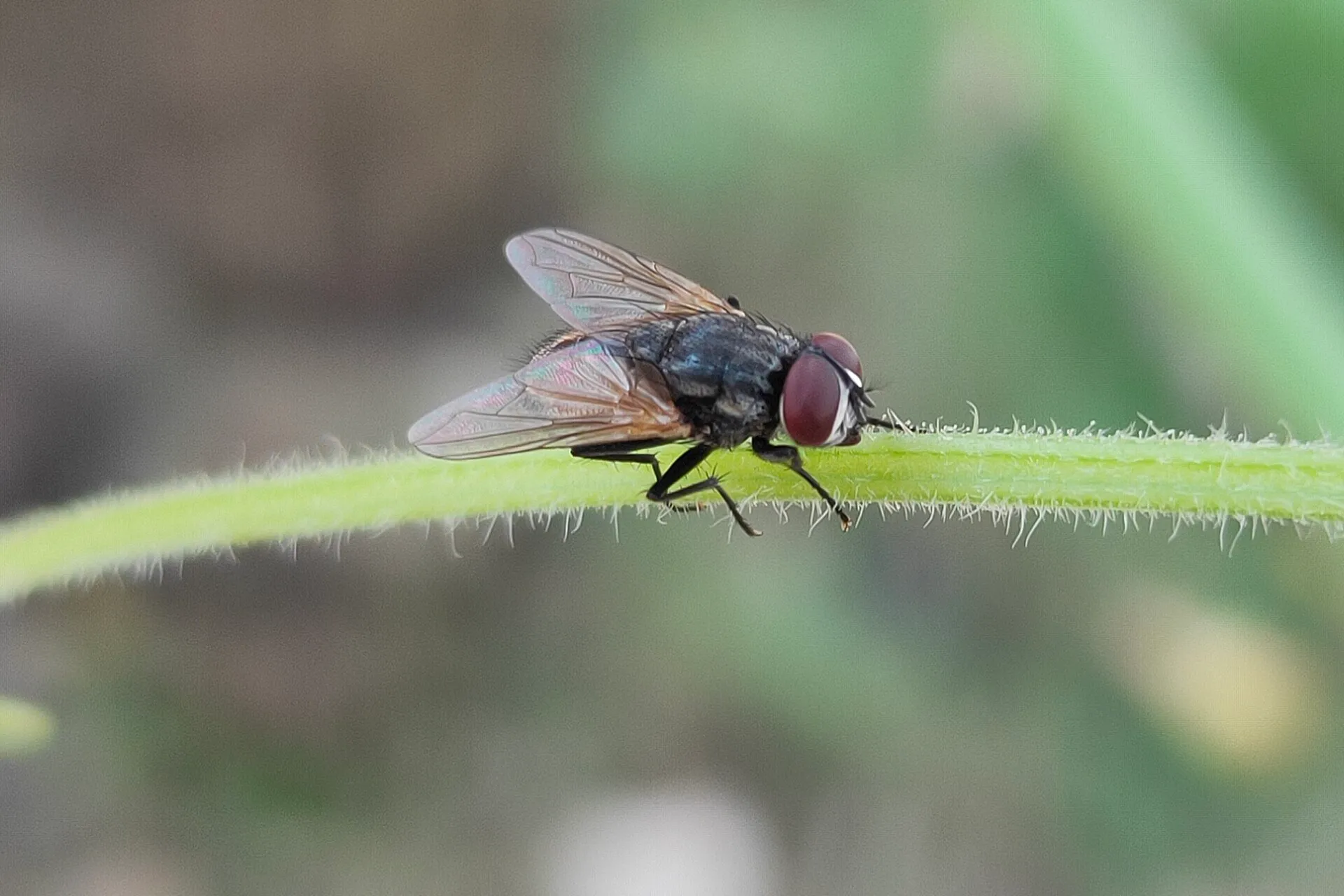
A “fly infestation” has a different cause depending on the species. The big, slow flies that appear at windows in winter come from the attic and do not breed in the house. The tiny flies around fruit are born in the kitchen. The minute fuzzy flies in the basement come out of a drain. Insecticide sprayed at random solves none of these: identify the fly first, then remove its source.
Four flies, four sources
| Fly | Size | Where you see it | Source |
|---|---|---|---|
| Cluster fly | 8 to 10 mm, sluggish | sunny windows, attic, fall and winter | overwinters in walls; larvae in earthworms outdoors |
| House fly | 6 to 7 mm | kitchen, near garbage, summer | waste, compost, animal droppings |
| Fruit fly | 2 to 3 mm, red eyes | fruit, compost, sink | fermenting matter |
| Drain fly | 2 to 4 mm, fuzzy | basement or shower drain | gelatinous film inside the drain |
The cluster fly
This is the typical fly of South Shore homes surrounded by lawns and fields. Its larvae live as parasites in earthworms. From late August to October, adults gather in large numbers on sunny walls, especially those facing south and west, and slip into siding gaps, soffits and the attic to overwinter. In mild weather, or when heating warms the walls, they wake up and look for window light.
They do not lay eggs in the house and do not contaminate food the way house flies do. The problem is their numbers and their return every year. It is exactly the same mechanism as with Asian lady beetles, and the same sealing work helps against both.
The house fly
In large numbers, it signals a source nearby: poorly closed garbage, compost, animal waste, sometimes a dead animal in a wall or crawlspace. In a business that serves food, its presence is a non-compliance: see the page on restaurants.
Fruit flies and drain flies
Fruit flies breed in overripe fruit, compost, empty bottles and grimy sink drains. Drain flies develop in the gelatinous film of little-used drains. In both cases, clean the source; a cider vinegar trap catches the remaining adults.
What professional treatment can do
- Identify the species and find the source.
- For cluster flies: exterior treatment of exposed walls in late summer, before they get in, then sealing gaps in siding, soffits and window frames.
- For flies already in the walls: vacuum as they appear, and sometimes a targeted attic treatment.
- For house flies: remove the source, then use suitable traps.
Insecticide applied in a wall or on a façade is a pesticide application: the applicator must hold a CD5 certificate from the Environment ministry.
What it costs
No fixed range is published for flies, because the price depends first on the source found. Published ranges for other pests are on the page about extermination costs.
Prevention
- Seal gaps on south and west walls, window frames and soffits in August.
- Repair screens and weatherstripping.
- Keep garbage and compost closed, and take them out often in summer.
- Scrub little-used drains once a month.
The same gaps let in earwigs and spiders: one good sealing job handles a large share of fall invaders.
Frequently asked questions
Why do flies show up at the windows in the middle of winter?
They are almost always cluster flies. They get into walls and the attic from late August to October to overwinter, then wake up in mild weather or with the heating and head for the light of the windows. They do not breed inside the house.
Where do cluster flies come from?
Their larvae live as parasites in earthworms, outdoors, in lawns and fields. The adults then look for winter shelter, mainly on sunny walls. The house is not the source: it is a refuge.
How do I get rid of fruit flies?
By removing the source: overripe fruit, the compost bin, empty bottles, a grimy sink drain. A small dish of cider vinegar with a drop of dish soap traps adults, but without removing the source they are back within days.
What is a drain fly?
A tiny fuzzy fly with heart-shaped wings that develops in the gelatinous film inside little-used drains. Scrubbing the drain with a brush solves it; insecticide poured into the drain does not reach larvae protected by that film.
Does a treatment solve cluster flies?
An exterior treatment of exposed walls in late summer, before the flies move in, cuts their numbers the following fall. Once they are in the walls, vacuum them up as they appear and seal in spring. The same work also reduces Asian lady beetles.
Lots of house flies: is it serious?
It means there is a source nearby: garbage, compost, animal waste, sometimes a dead animal in a wall or crawlspace. Finding and removing that source is the priority, especially in a food business.
This pest in commercial settings
Next steps
Related pests
- Asian lady beetles
- cockroaches
- pantry moths and carpet beetles
Updated