Bed bugs: confirm them, treat them, and don't move them
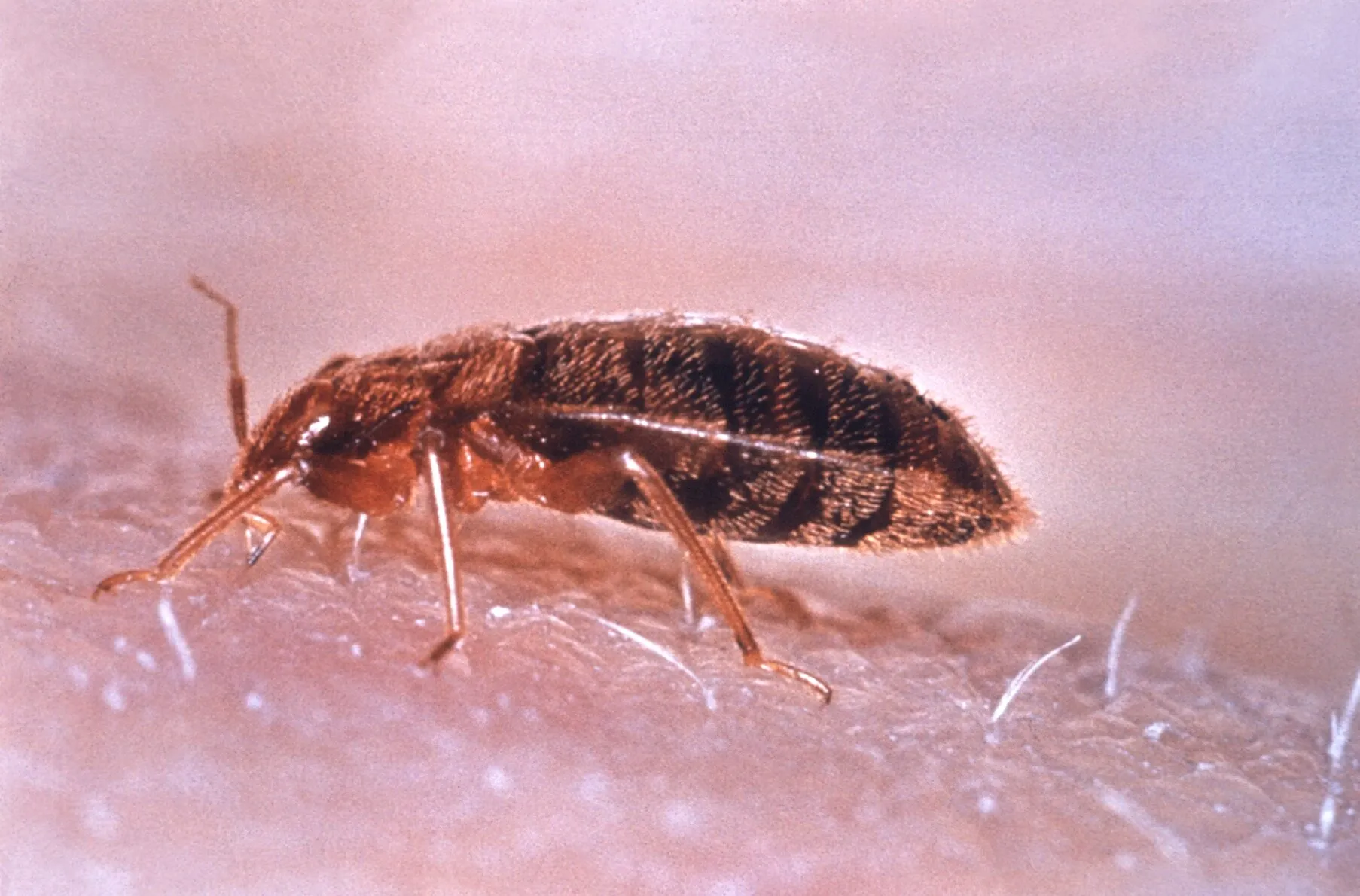
Bed bugs are not a sign of a dirty home: they travel in luggage, second-hand furniture and moving boxes. On the South Shore they turn up most often in the multiplexes and apartment towers of Longueuil and Brossard, where they move from unit to unit through shared walls. The riskiest moment of the year is well known: moving day on July 1.
Identifying a bed bug
The adult measures 4 to 7 mm. It is reddish brown, flat and oval, about the size of an apple seed, and becomes redder and swollen after feeding. Nymphs, 1 to 4 mm, are almost translucent. Eggs, about 1 mm, are pearly white and glued into cracks.
It is often mistaken for:
- the bat bug, nearly identical to the naked eye, found when a bat colony lives in the attic or a wall;
- a cockroach nymph, with much longer antennae, which moves fast;
- a carpet beetle larva, hairy and striped, in rugs and closets;
- a tick, which has eight legs and usually turns up after time outdoors.
Signs of an infestation
- clusters or rows of bites on waking, often on the arms, neck and shoulders;
- small ink-like black spots in the seams of the mattress and box spring;
- blood smears on sheets or pillowcases;
- empty brownish shed skins around the bed;
- live insects in seams, behind the headboard, in furniture joints;
- a sweet, musty smell in a heavily infested bedroom.
Bites alone prove nothing: some people do not react at all, and other insects bite too. Confirmation requires an insect, a shed skin or the characteristic spots.
Why act early
A female lays eggs steadily over her life, and eggs hatch in one to two weeks depending on temperature. An infestation caught early is often limited to one bed and a nightstand. Left for a few months, it reaches the living room, the electrical outlets and the neighbouring units.
The effects are real even without disease: itching, skin reactions, disrupted sleep and anxiety. In an apartment building, every week of waiting increases the number of units to treat, and the cost.
How treatment works
- Inspection. Beds, box springs, upholstered furniture, baseboards and outlets. In a building, the neighbouring units above, below and on each side are part of the inspection.
- Preparation. Bedding and clothes washed and dried on the hottest setting, then stored in sealed bags; clutter cleared around the bed. A written list should be provided before treatment.
- Treatment. Depending on the case, a residual treatment, applied to seams, cracks and furniture and often combined with vacuuming and steam, or a heat treatment, which raises the temperature of the home to a level lethal to eggs and adults alike.
- Protection. Certified encasements for the mattress and box spring, interceptors under the bed legs.
- Follow-up. Two or three visits about two weeks apart for a residual treatment, because eggs often survive the first pass. The interceptors serve as the measure.
- Prevention. The habits that prevent a new infestation.
What it costs on the South Shore
For a residual or combined treatment, average ranges published for Greater Montreal run $350–$850, generally for several visits. A heat treatment, done in a single day, runs $530–$1,587 according to prices published for Montreal. In an apartment building, the number of units to inspect often moves the total more than the method does. Sources are on the exterminator pricing page.
Check that the quote states whether follow-up visits are included. Two prices that look comparable are not if one covers a single visit and the other three.
The CD5 certificate in a bedroom
A residual treatment is applied where you sleep. In Quebec, the person applying it must hold a CD5 certificate from the Ministry of the Environment. Ask to see it, ask which product is used, and have the quote state how long before you can use the bedroom again and what to do about a baby, a pet or an aquarium.
Tenants, landlords and July 1
In Quebec, the landlord must keep the dwelling in good habitable condition, and the tenant must notify the landlord promptly of an infestation. In practice, the outcome depends on both: the occupant preparing the unit, the owner having neighbouring units inspected. If there is a disagreement, the Tribunal administratif du logement can be involved.
Around July 1, furniture left on the sidewalk is a well-known source of new infestations. A free couch can cost a full treatment.
Preventing another infestation
- Inspect any second-hand furniture before bringing it in: seams, joints, underneath. Avoid salvaged mattresses and upholstered furniture.
- Back from a trip, unpack in the bathroom or on a hard surface, and run clothes through a hot dryer.
- Reduce clutter around the bed, which multiplies hiding places.
- Keep the encasements on the mattress and box spring even after treatment.
- Tell the landlord early if you rent: one infested unit is far simpler to handle than a whole floor.
For an apartment building, hotel or senior residence, see commercial pest control. If you are moving this week, read what to do in an emergency.
Frequently asked questions
Can I get rid of bed bugs myself?
A confirmed infestation is very rarely solved without professional help. Eggs survive most consumer products, and the insects hide in furniture, baseboards and electrical outlets. Home efforts mostly spread the infestation into other rooms before treatment.
Do I have to throw out the mattress?
Almost never. A treated mattress protected by a certified bed bug encasement remains usable. A mattress dragged into the hallway or onto the sidewalk, on the other hand, often infests the next one and the neighbours. If you do throw one out, wrap it and mark it as infested.
How long can a bed bug survive without feeding?
Several months, depending on temperature and life stage. That is why leaving the home for a few weeks solves nothing: the insects wait for the occupants to return.
Do bed bugs transmit diseases?
No transmission of disease to humans has been demonstrated. Their real effects are itching, skin reactions in some people, lost sleep and anxiety, none of which should be taken lightly.
Do bug bombs work?
No. Foggers do not reach insects hidden in seams and cracks, and they push them into the walls and neighbouring units. They are one of the main reasons an infestation in one apartment spreads to a whole building.
I rent. Who has to pay for bed bug treatment?
In Quebec, the landlord must keep the dwelling in good habitable condition, and the tenant must notify the landlord without delay. In most cases the landlord arranges treatment, and the tenant cooperates with preparation. If there is a disagreement, the Tribunal administratif du logement can be involved. This is general information, not legal advice.
Should I sleep in another room in the meantime?
Not recommended. Bed bugs follow the person and settle in the new room. Keeping the same bed, with interceptors under the legs, also lets you measure the infestation and the effect of treatment.
How do I know the treatment worked?
No new bites, no fresh spots and no insects in the interceptors under the bed legs for several weeks after the last visit. That is why follow-up is part of the treatment.
This pest in commercial settings
Where this pest is most common
Towns in the territory where this pest puts the most pressure, based on each town’s housing and surroundings.
High pressure
Moderate pressure
Next steps
Related pests
- cockroaches
- fleas
- pantry moths and carpet beetles
Official sources
The legal texts and government pages cited on this page. Always check them for the current version.
Updated