Raccoon in the chimney, attic or under the deck
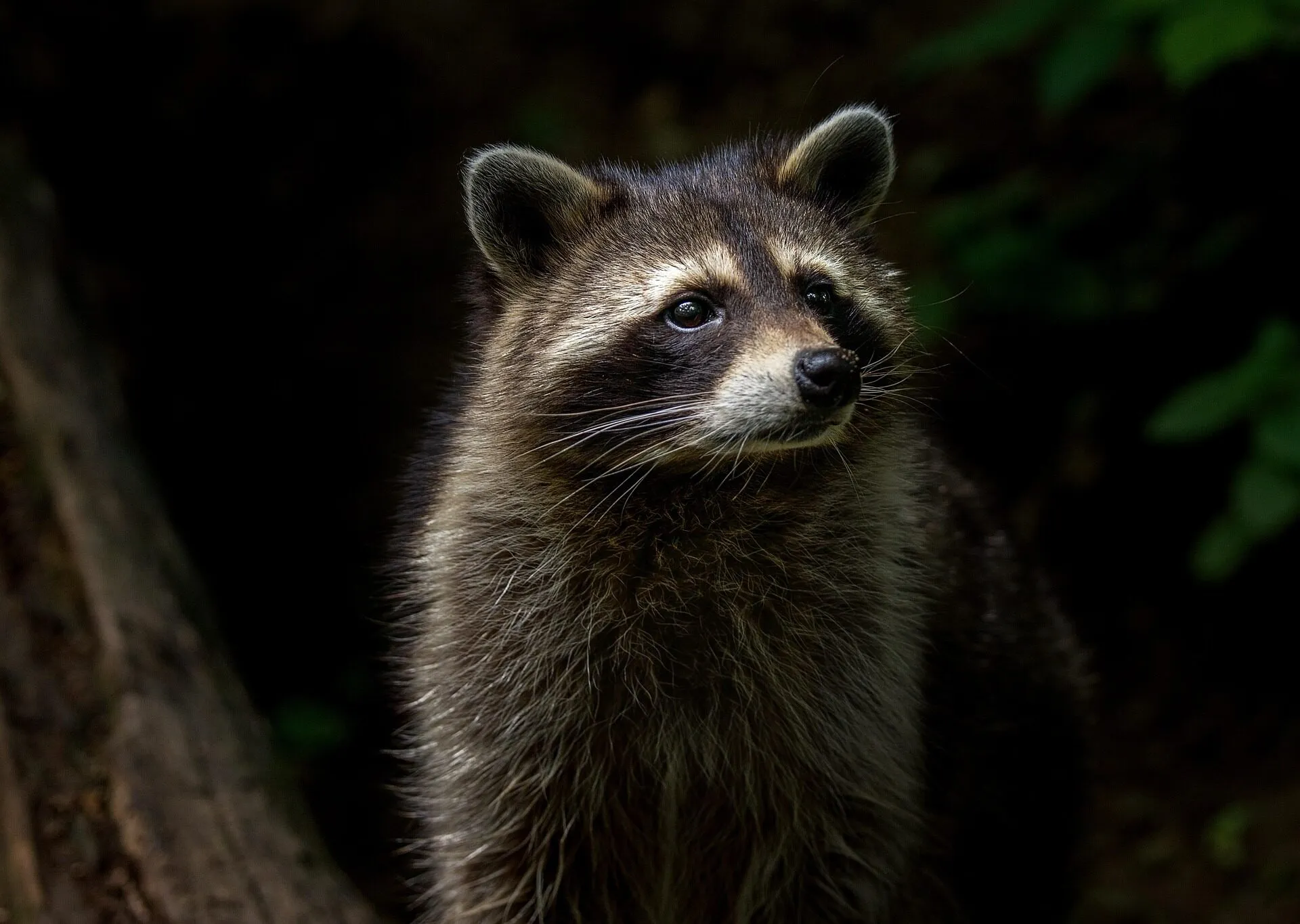
A raccoon settling into a chimney, attic or the space under a deck is almost always a female looking for a safe place to give birth. On the South Shore, one rule changes everything since 2025: moving a live raccoon is prohibited in every town this site covers, from Longueuil to Granby. The fix is scaring the animal off and closing the entry, not a one-way trip to the woods.
Identifying a raccoon
Raccoons measure 60 to 96 cm in total length and weigh 5 to 18 kg. The black mask and ringed tail make them hard to mistake in daylight. At night, under a streetlight, people sometimes take one for a large stray cat. A groundhog, by contrast, is brown with a short tail, lives on the ground and comes out by day.
Raccoons are skilled climbers. They reach the roof by a tree, a downspout or a wall corner, then use an existing opening: an uncapped chimney, a roof vent, a weakened soffit. Unlike a squirrel, which chews, a raccoon tears and pushes.
The calendar that matters
- January and February: mating.
- April and May: kits are born, often in a chimney or attic.
- Summer: kits follow their mother outside, but the den stays in use.
- Fall: some young leave; others stay with their mother until the next spring.
Spring is when a badly timed job does the most harm: a chimney sealed in May can trap an entire litter.
What the law allows on the South Shore
The relocation ban. Because of raccoon rabies cases in Estrie and Montérégie, the Québec government prohibits moving or relocating live raccoons, striped skunks, foxes and coyotes within a long list of municipalities. Longueuil, Brossard, Saint-Lambert, Boucherville, Saint-Bruno-de-Montarville, Sainte-Julie, Varennes, Chambly, Beloeil, Saint-Jean-sur-Richelieu, La Prairie, Candiac, Saint-Constant, Châteauguay and Granby are all on it. The ban runs until October 6, 2026 and may be extended: check the current list on Québec.ca. The rule is explained in detail in the post on the raccoon relocation ban.
Scaring off comes first. Québec’s Act respecting the conservation and development of wildlife only allows you to trap or kill an animal damaging your property when you cannot scare it away or otherwise stop the damage. In practice, step one is making the den uncomfortable and blocking the way in.
If trapping becomes necessary. The animal is released on site, outside the building, once the entry is closed, or killed as a last resort. No permit is required in that context, although a municipal by-law may restrict firearms.
The job, step by step
- Inspect the roof, chimney, soffits and the space under decks: find the active entry and the damage.
- Check for kits before closing anything.
- Scare the mother off with light, noise or smell near the den, so she moves her young herself.
- Install a one-way door once the kits are old enough to follow her.
- Close the entry for good: chimney cap, metal mesh, soffit or vent repair.
- Clean the latrine with gloves and a mask: raccoon droppings can carry the eggs of a parasitic roundworm.
What it costs
A price study for Montreal and surrounding areas puts trapping at $150 to $325, with an average of $226. Roof, soffit or chimney repairs come on top and often cost more than the trapping. Other ranges are on the pricing page.
Rabies: the right reflexes
Raccoon rabies is circulating in the region. Never touch a raccoon, dead or alive, with bare hands, and do not feed the ones visiting your yard. After a bite or scratch, wash the wound with soap and water for 10 to 15 minutes and call Info-Santé 811. A raccoon that staggers, circles or seems paralyzed in broad daylight should be reported, not approached.
Keeping them from coming back
- Install a chimney cap or 6 mm metal mesh.
- Trim branches that touch the roof.
- Keep garbage and compost bins closed and sheltered.
- Screen the space under decks and sheds: it also keeps skunks away.
Homes in wooded neighbourhoods, near Mont Saint-Bruno or among the big trees of Vieux-Longueuil, often have branches over the roof: that is the first thing to check. To see how a visit unfolds, read how a pest control job works.
Frequently asked questions
Can I trap a raccoon and release it in the woods?
Not on the South Shore right now. Every town this site covers is on the list of municipalities where moving or relocating a live raccoon is prohibited, because raccoon rabies has been detected in Estrie and Montérégie. The ban runs until October 6, 2026 and may be extended.
So what happens to a trapped raccoon?
When it was impossible to scare the animal off or stop it from causing damage, the Québec government allows two options: release it on site, outside the building, once the entry is closed, or kill it as a last resort. No permit is required in that context, but municipal firearm by-laws still apply.
There are babies in my chimney. What should I do?
Wait, and have the entry closed at the right time. Kits are born in April or May and depend on their mother for weeks. Closing the chimney or driving the mother off too early condemns them, and a mother separated from her kits may tear a new opening to reach them.
A raccoon scratched me. Is it serious?
Act right away. Wash the wound with soap and water for 10 to 15 minutes, then call Info-Santé 811, which will assess the rabies risk and refer you if needed. Never handle the animal with bare hands.
Do repellents and lights make a raccoon leave?
Sometimes, for a while. A light, a radio or an ammonia-soaked rag near the entry can push a female without young to move. That is exactly what the law asks you to try first: scare the animal off before trapping it. Without a lasting fix on the entry, another raccoon moves in.
How do I keep raccoons out of the chimney?
With a chimney cap or a securely fastened metal mesh with 6 mm openings, as the Québec government recommends. Also trim branches touching the roof and keep garbage and compost bins closed.
Next steps
Other nuisance wildlife
Official sources
The legal texts and government pages cited on this page. Always check them for the current version.
Updated