Groundhog under the shed or near the foundation: what to do
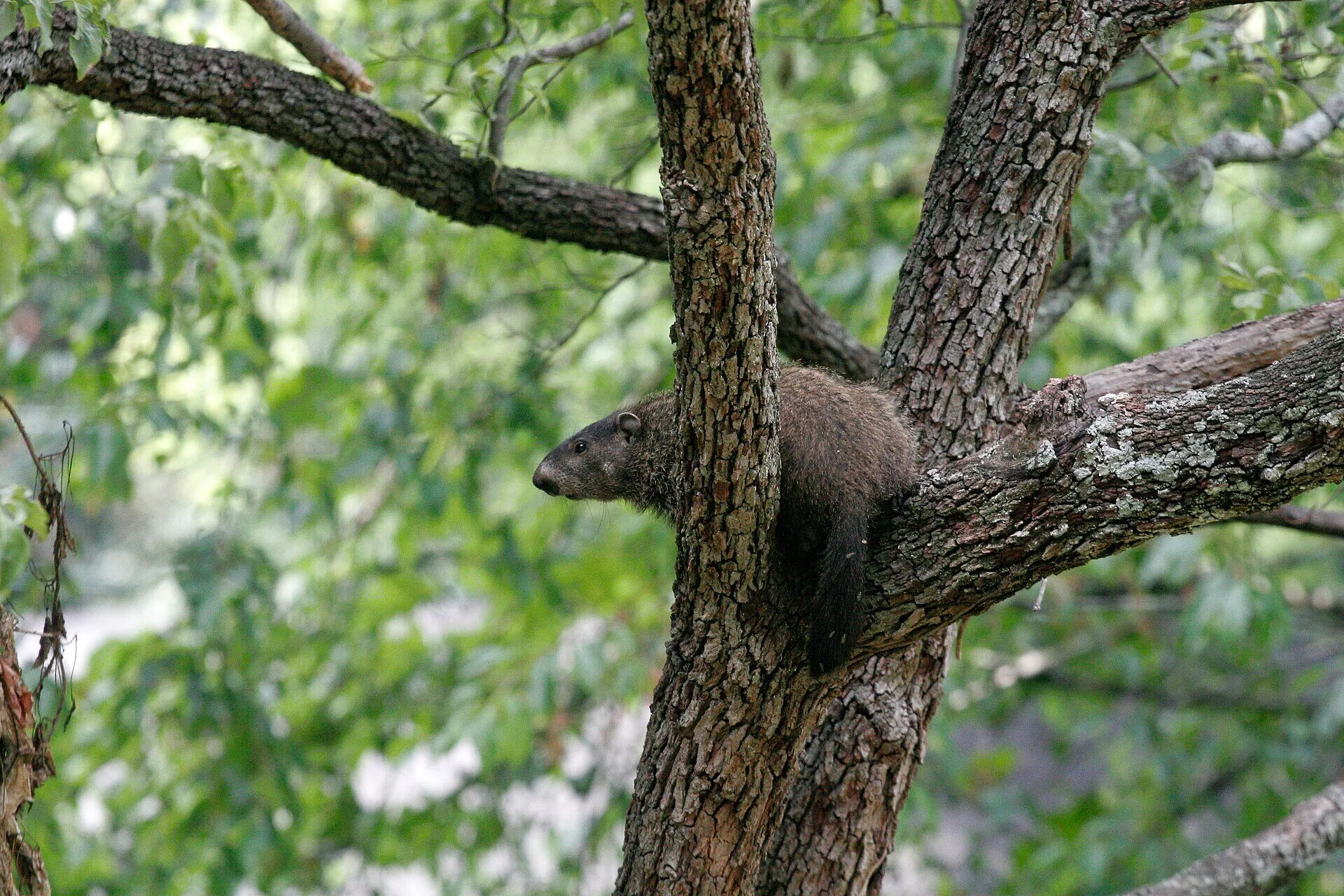

A hole about twenty centimetres wide with a mound of soil at the foot of the shed, and a vegetable garden eaten to the ground: that is a groundhog. It lives on the ground, comes out by day and digs burrows with several exits. The real risk is not the garden but a burrow dug under a slab or along a foundation.
Identifying a groundhog
Groundhogs measure 45 to 66 cm. They are the largest squirrel in Québec but, unlike their cousins, live almost entirely on the ground and very rarely climb trees. Greyish brown, stocky, short-tailed, they are often seen sitting still near the burrow entrance. A hole with no soil mound under a deck and a musky smell points instead to a skunk.
Signs a groundhog is around
- a 20 to 30 cm entrance with a mound of fresh soil;
- more entrances a few metres away: a burrow has 2 to 5 entrances joined by tunnels;
- vegetables and flowers eaten to the ground;
- bark chewed at the base of fruit or ornamental trees.
Why act
When food is plentiful, a groundhog generally stays within 15 to 90 m of its burrow: once it has settled near a vegetable garden, it will not leave on its own. Its tunnels can undermine the soil under a shed, deck, patio slab or along a foundation. The older the burrow, the larger the network.
The calendar
- February or March: emerges from hibernation, hungry.
- Spring: a litter of 4 to 5 young.
- Summer: the young leave the burrow at about three months.
- Fall: fattens up, then hibernates.
The best windows to close a burrow are late summer, once the young have left, or early spring, before the birth.
What the law allows
Groundhogs are not covered by the rabies-related relocation ban. Québec’s Act respecting the conservation and development of wildlife still applies: you may trap an animal causing damage only when it is impossible to scare it off or otherwise stop the damage. The Québec government discourages relocation, because another groundhog quickly moves into an open burrow.
The job, step by step
- Find every entrance, including those hidden under the shed or shrubs.
- Check activity: crumpled paper or loose soil in each entrance, checked after 48 hours.
- Drive the animal off: repeated disturbance, strong smells near the entrances, cutting off access to the garden.
- Trap, if that fails, outside the period when young are in the burrow.
- Close the empty burrow and backfill near structures.
- Buried mesh around the shed, deck or garden.
What it costs
No regional range is published for groundhogs: the price depends on the number of burrows, how close they are to foundations and how much mesh is installed. Published ranges for other animals are on the pricing page.
Keeping groundhogs away
The Québec government recommends an electric fence about 1 m high, or mesh with a buried section at least 25 to 30 cm deep, ideally 45 to 60 cm. Around a shed, mesh laid in an “L” shape, buried and bent outward, stops a groundhog from digging underneath.
Yards bordering a field, woodlot or vacant lot are the most exposed anywhere in the service area. That is the case in the Saint-Bruno-de-Montarville neighbourhoods backing onto the mountain and the national park. The same mesh also keeps raccoons from under structures.
Frequently asked questions
Can a groundhog damage my foundation?
Its tunnels can undermine the soil beneath a slab, shed, deck or along a foundation, a risk the Québec government mentions. A burrow right against a foundation should be taken seriously: the soil removed leaves voids and encourages water infiltration.
When do groundhogs have young?
Once a year, in spring, after coming out of hibernation. The female has 4 to 5 young, which leave the burrow at about three months. Closing a burrow in spring or early summer risks sealing a litter inside.
Can I just fill in the burrow?
Only when it is empty. A groundhog burrow has 2 to 5 entrances: filling the one you can see does nothing, and trapping an animal or young inside is cruel and ineffective. Check activity first by stuffing crumpled paper into each entrance and seeing whether it has moved after 48 hours.
Can a trapped groundhog be relocated?
Groundhogs are not covered by the rabies-related relocation ban. The Québec government still discourages relocation. The law first asks you to try to drive the animal off or stop the damage; trapping comes only if that is impossible.
What fence protects a vegetable garden from groundhogs?
An electric fence about 1 m high, or mesh with a buried section at least 25 to 30 cm deep, ideally 45 to 60 cm, according to the Québec government. Groundhogs climb poorly but dig well: the buried part is what counts.
Do groundhogs hibernate?
Yes. They hibernate all winter in the burrow and emerge hungry in February or March, having lost about 30% of their body mass. Early spring is therefore when they eat the most young shoots.
Next steps
Official sources
The legal texts and government pages cited on this page. Always check them for the current version.
Updated