Squirrels in the attic: find the entry and close it for good
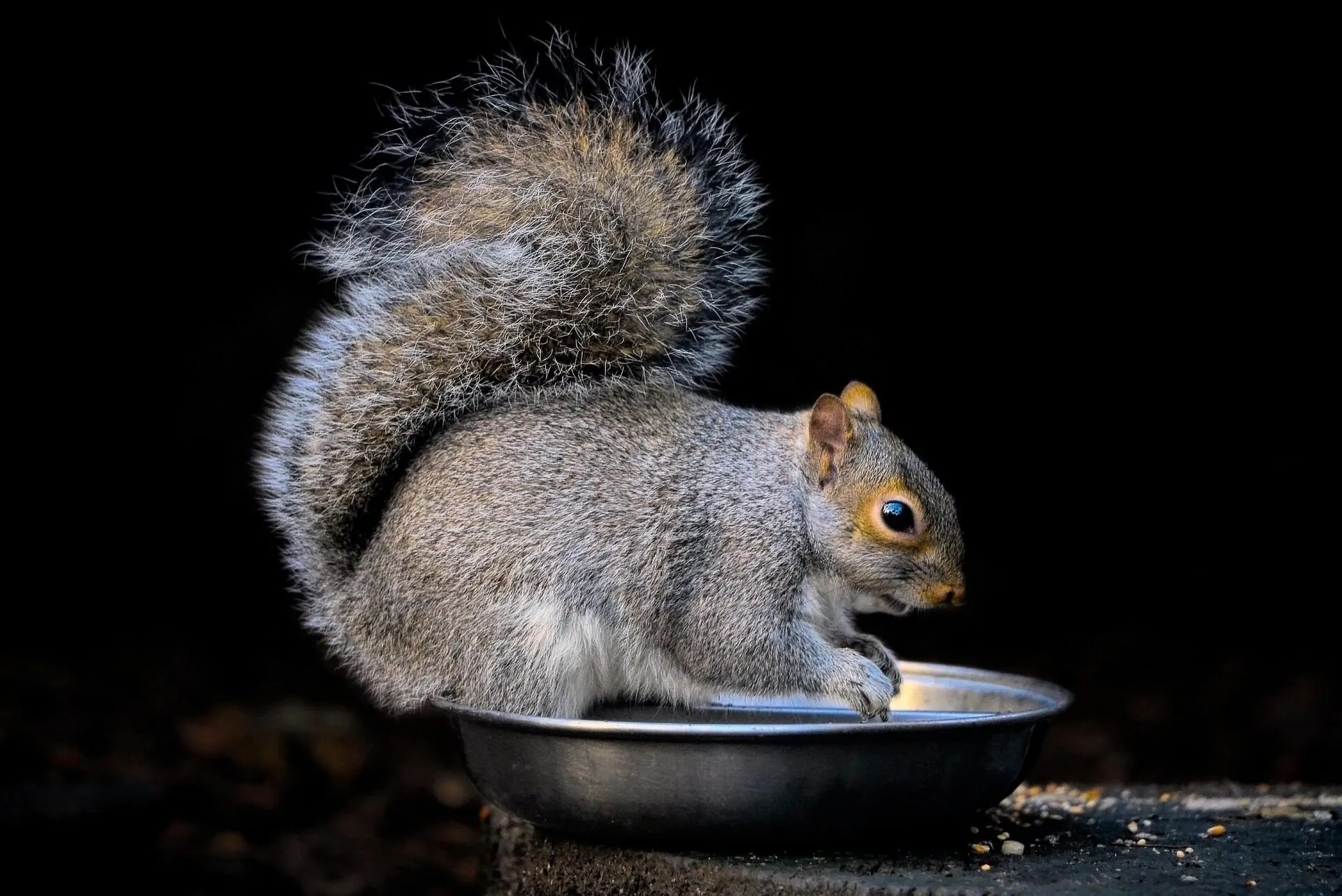
Quick footsteps in the ceiling at 6 a.m., and again late in the afternoon: that is almost always a squirrel. It does not look for an opening, it makes one, by chewing through a soffit, a roof corner or the screen on a vent. The fix has two parts: get the squirrel out without trapping young inside, then close the entry with a material it cannot chew.
Identifying the squirrel
The grey squirrel measures 43 to 54 cm including the tail. Its coat is grey or black, and in southwestern Québec some individuals are white or cinnamon. The red squirrel is smaller and noisier, with a reddish back and a white belly. Both are active by day, which sets them apart from rats, which are mostly nocturnal, and from mice in the walls, whose sounds are lighter and more scattered.
Signs of a squirrel in the attic
- running and scratching in the ceiling, morning and late day;
- a chewed hole with fresh, pale edges in a soffit, trim or vent;
- acorns, nuts or seeds in the insulation;
- insulation flattened or shredded into a nest;
- chewed electrical cables.
Why you should not wait
Squirrels do not hibernate. One that moves in during the fall spends the winter in the attic and may give birth there in spring: births happen from April to August, and grey squirrels can have one or two litters a year. All that time, it chews. A bare wire in an insulated attic is a real fire risk, and every season widens the opening that lets in water and other animals.
What the law allows
Squirrels are not among the species that may not be moved because of rabies. Québec’s Act respecting the conservation and development of wildlife still applies: you may trap or kill an animal causing damage only when you cannot scare it off or otherwise stop the damage. In an attic, a one-way door follows exactly that logic. The Québec government also strongly discourages relocation: the entry stays open and another squirrel takes over.
The job, step by step
- Inspect the roof: find the active entry and check the other weak points (soffits, vents, roof junctions, chimney).
- Check for young: in spring and summer, a litter may be in the insulation.
- Install a one-way door on the active entry: the squirrel leaves to feed and cannot get back in.
- Confirm the attic is empty over a few days.
- Close it for good with heavy metal mesh with openings of 1 cm or less, and repair the chewed wood.
- Restore soiled insulation and check the wiring if damage is visible.
What it costs
No reliable regional range is published for squirrels: the price depends on the number of entries, the roof height and the repairs. A written quote after an inspection is the only figure that counts. Published ranges for other animals are on the page about pest control prices.
Keeping squirrels out
- Trim branches to more than 3 m from the roof, as the Québec government recommends.
- Replace plastic or thin aluminum vent screens with heavy metal mesh.
- Have soffits and roof junctions checked in the fall, before squirrels look for winter shelter.
- Keep bird feeders away from the house: they mostly feed squirrels.
Streets lined with big trees, as in Saint-Lambert or Boucherville, often have branches over the roofs. A roof entry also serves raccoons and bats: the repair should cover every weak point, not just the squirrel’s hole.
Frequently asked questions
Why do squirrels get into the attic?
For shelter and to give birth. Grey squirrels can have one or two litters a year, born between April and August in Québec. An insulated, warm, dry attic is an ideal site, especially when a branch gives direct access to the roof.
Do squirrels hibernate?
No. Grey and red squirrels stay active all winter. A squirrel that moves into the attic in the fall can stay until spring and give birth there.
Are squirrels in the attic dangerous?
The main risk is fire: squirrels chew electrical wiring. They also soil insulation and enlarge openings that let in water and other animals. The longer they stay, the more the repair costs.
Can I just plug the hole?
Not until you are sure no squirrel or litter is inside. A trapped squirrel chews a new way out, often into the house, and trapped young die in the attic. The safe method is a one-way door, then the permanent fix.
What material keeps a squirrel from getting back in?
Heavy metal mesh with openings of 1 cm or less, securely fastened, as the Québec government recommends. Spray foam, thin wood or plastic gets chewed through in days.
Can I trap a squirrel and release it far away?
Squirrels are not among the species covered by the rabies-related relocation ban. But the Québec government strongly discourages relocation: another squirrel moves in as long as the entry stays open, and relocated animals survive poorly. Closing the entry fixes the problem; moving the animal does not.
Next steps
Other nuisance wildlife
Official sources
The legal texts and government pages cited on this page. Always check them for the current version.
Updated