Skunk under the deck: getting it out without getting sprayed
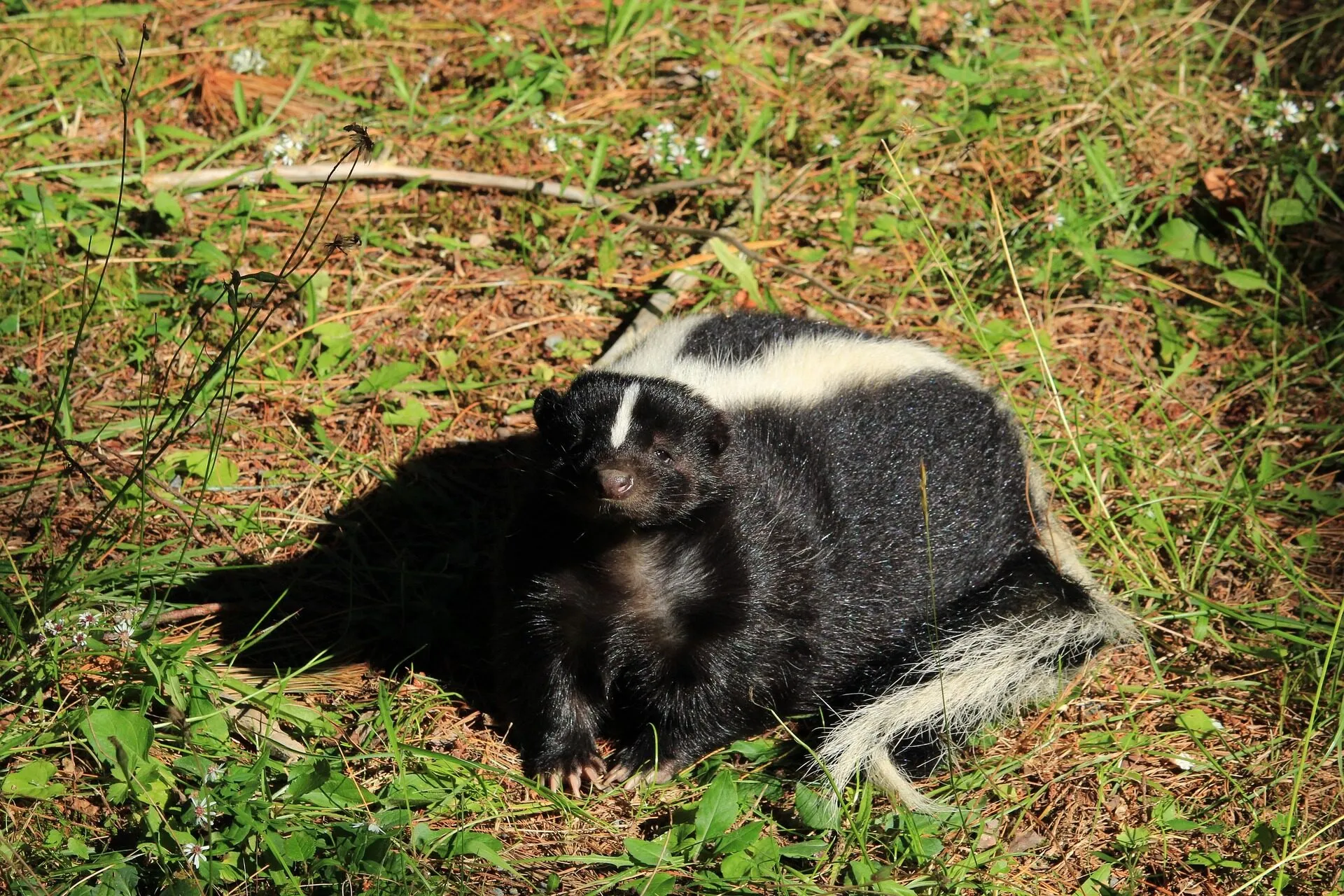
A skunk living under your deck is only dangerous if you surprise it. It wants a dry, dark shelter: under a deck, a patio or a shed. The right move is to get it to leave on its own, then close the entry with buried mesh. On the South Shore, trapping it to release it elsewhere is prohibited for now, because of raccoon rabies.
Identifying a striped skunk
Striped skunks measure 54 to 77.5 cm including the tail and weigh 1 to 6.3 kg. They are black with two white stripes down the back, active at night and present in Québec year-round. A skunk warns before spraying: it stamps its front feet, backs up and raises its tail. Backing away slowly at that point almost always works.
Signs a skunk is around
- a musky smell that keeps returning to the same spot, even without a recent spray;
- a clean hole under the deck, patio or shed;
- small cone-shaped holes in the lawn where it searched for grubs overnight;
- paw prints in loose soil at the entrance.
A wider burrow with a mound of soil beside a foundation points instead to a groundhog, which comes out by day.
What the law allows on the South Shore
No relocation. The Québec government prohibits moving or relocating a live striped skunk within the municipalities surrounding known cases of raccoon rabies. Every town this site covers is on that list, from Châteauguay to Varennes and from Saint-Lambert to Granby. The ban runs until October 6, 2026 and may be extended: see what the ban means for your home.
Scaring off before trapping. Québec’s Act respecting the conservation and development of wildlife allows trapping or killing an animal that damages property only when it is impossible to scare it off or otherwise stop the damage. A skunk under a deck can nearly always be scared off.
If trapping becomes necessary. The animal is released on site once the entry is closed, or killed as a last resort. No permit is required in that context. Trapping a skunk without getting sprayed takes the right equipment, which is often where a professional earns the fee.
Getting the skunk out, step by step
- Check the season. From late May to mid-summer, kits may be in the den.
- Scare it off: light, radio, an ammonia-soaked rag near the entry, for a few days.
- Track the exits: spread flour or fine soil in front of the hole and read the tracks in the morning.
- Close it after it leaves, with buried metal mesh, not just a board propped in place.
- Remove what attracts it: pet food outside, open compost, a lawn full of grubs.
What it costs
A price study for Montreal and surrounding areas puts skunk trapping at $150 to $325, with an average of $226. Installing exclusion mesh around a deck or shed is priced separately, by length. See the other price ranges.
Rabies and pets
Striped skunks can carry rabies. Do not approach a skunk that is active in broad daylight, staggering or unresponsive. After a bite or contact with saliva, wash with soap and water for 10 to 15 minutes and call Info-Santé 811. Keep your pets’ vaccinations current and do not leave their food outside.
Keeping skunks from coming back
The Québec government recommends mesh with openings of 5 cm or less, buried at least 25 to 30 cm, ideally 45 to 60 cm, all around the deck, patio or shed. Install it before spring, when females look for a place to give birth. Yards that back onto fields and woodlots, as in Sainte-Julie or Varennes, see skunks more often: that is where the mesh pays off fastest.
The same mesh also blocks raccoons. For a strong smell inside the house itself, or an animal stuck in a basement window well, see what to do in an emergency.
Frequently asked questions
Can I trap a skunk and release it somewhere else?
No, not on the South Shore right now. Every town this site covers is on the list of municipalities where moving a live striped skunk is prohibited, because of raccoon rabies. The ban runs until October 6, 2026 and may be extended.
How do I get a skunk out from under the deck?
Scare it off, then close the entry once it has left: a light and radio near the hole, an ammonia-soaked rag, fine soil spread in front of the entry to track comings and goings. Skunks go out at night. When the tracks show it has left and no kits remain, the hole can be closed.
When are there kits under the deck?
Mating happens mostly in March and kits are born around late May, five or six per litter on average. From late May into summer, sealing a den can trap a litter. If you are unsure, wait until the family comes out together, usually by mid-summer.
My dog got sprayed. What now?
Keep the dog outside, check its eyes and rinse them with water if they look irritated. For the smell on objects and surfaces, the Québec government mentions commercial products or a bleach or vinegar solution, one part to ten parts water. For the dog's coat, ask your veterinarian.
Can skunks carry rabies?
Yes. After a bite, a scratch or contact with saliva, wash the area with soap and water for 10 to 15 minutes and call Info-Santé 811. Make sure your dog's or cat's vaccinations are up to date.
What kind of mesh keeps a skunk from coming back?
Metal mesh with openings of 5 cm or less, buried at least 25 to 30 cm deep, ideally 45 to 60 cm, around the deck or shed. That is the Québec government's recommendation: skunks dig, but not deep enough to get under well-buried mesh.
Next steps
Other nuisance wildlife
Official sources
The legal texts and government pages cited on this page. Always check them for the current version.
Updated