Ticks in your yard: lowering the risk of Lyme disease
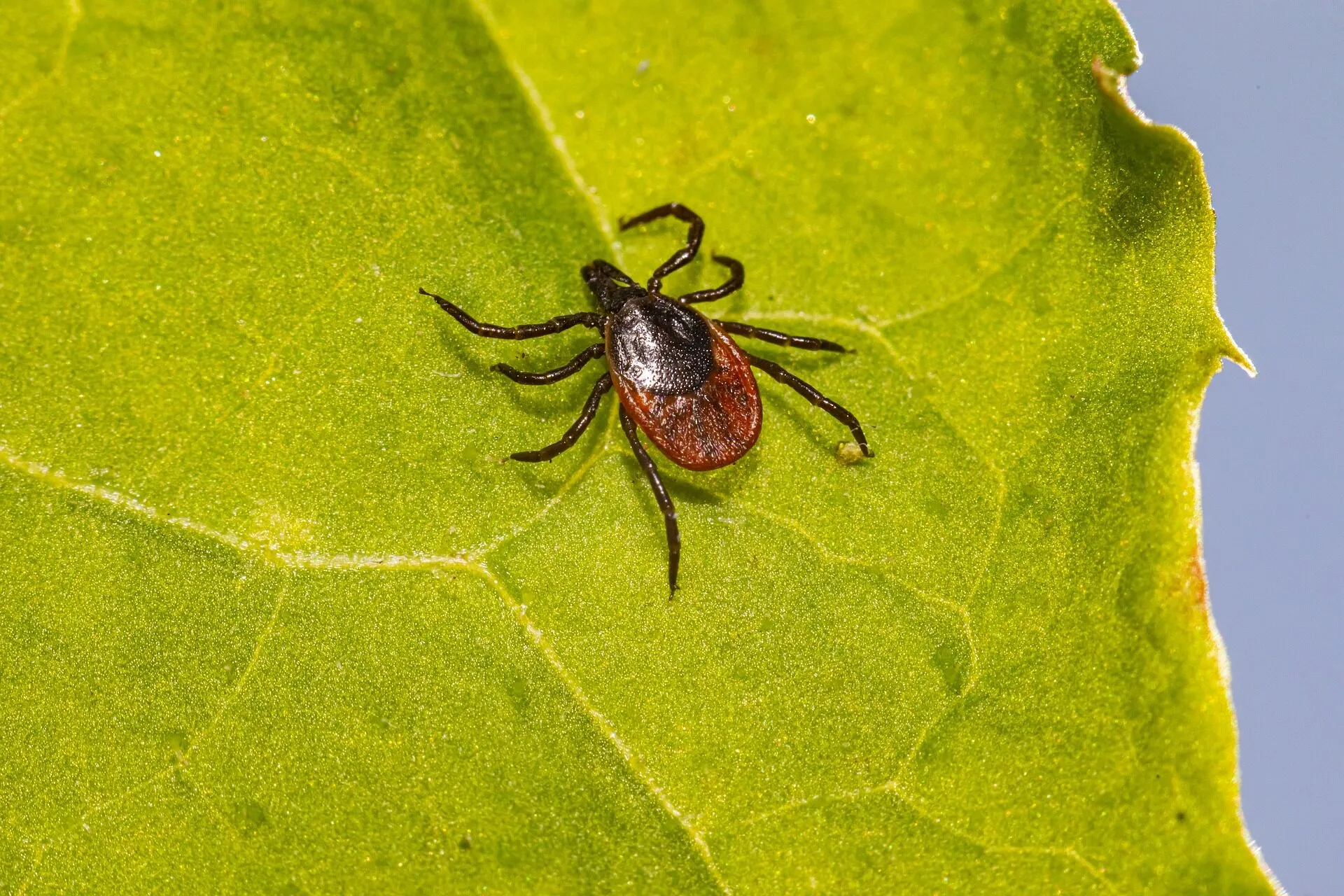
The blacklegged tick is the South Shore pest you do not take chances with: it transmits Lyme disease. In 2025, most cases in Québec were acquired in Estrie, Montérégie and on the island of Montreal. No “extermination” makes a yard tick-free: protection comes from how the yard is kept, checking yourself after every outing, and the right reflex after a bite.
Identifying the blacklegged tick
A tick is not an insect but a mite relative: it has eight legs. The nymph, active mostly in late spring and summer, is about the size of a poppy seed, which is why it is rarely noticed before it attaches. The adult female has a red-brown abdomen and a black shield behind the head; engorged, it turns grey and swollen. The American dog tick, larger and marked with white, does not transmit Lyme disease.
Where ticks live in a yard
Ticks do not jump or drop from trees. They wait at the tip of a grass blade or leaf, at ankle or knee height, for an animal or person to brush past. They prefer:
- the edges of woods and hedges;
- tall grass and brush;
- dead leaves, which hold moisture;
- stone walls and woodpiles, home to the small rodents that feed them.
Yards that border woods, such as around Mont Saint-Bruno or near Îles-de-Boucherville National Park in Boucherville, are the most exposed.
If a tick is attached
- Remove it quickly with a tick remover or fine-tipped tweezers, never your fingers.
- Grasp it right at the skin and pull gently, firmly and steadily, without twisting or crushing.
- Clean the skin with soap and water and wash your hands.
- Keep the tick in an airtight container in the fridge, with the date and bite location.
- Call Info-Santé 811. Depending on the situation, a preventive antibiotic may be recommended.
- Watch your skin and how you feel over the following days, weeks and months.
Never squeeze the tick’s body: it increases the risk of transmission.
Setting up the yard
This is the measure that lasts. Public health authorities recommend:
- mowing the areas where people walk and children play;
- raking dead leaves and cutting brush and tall grass;
- laying a strip of wood chips or gravel at least 1 m wide between the woods and the lawn, patio or play area;
- placing play structures in the sun, away from trees;
- keeping bird feeders away from the house and limiting shelter for small rodents, such as woodpiles.
What about professional treatment?
A yard treatment can reduce ticks in the most-used areas, but it does not make a yard safe on its own, and ticks come back with animals. It complements yard management rather than replacing it. Products applied on residential property are regulated by Québec’s Pesticides Management Code, often by a municipal by-law too, and the applicator must hold a CD5 certificate from the Environment ministry. Ask which product will be used, on what area, and how long to keep children and pets away.
What it costs
No regional price range is published for ticks: treatments are priced by yard size and the wooded share, not by the house. Published ranges for other pests are on the pricing page.
Other backyard pests
The same damp, shady yard draws mosquitoes, which are controlled mainly by removing standing water. Wildlife crossing the yard, such as groundhogs or raccoons, also carry ticks. For a pet that will not stop scratching, see the page on fleas instead.
Frequently asked questions
How do I remove a tick properly?
With a tick remover or fine-tipped tweezers, never your fingers. Grasp the tick as close to the skin as possible and pull gently, firmly and steadily, without twisting or crushing it. Then clean the skin with soap and water and wash your hands. If the head stays in, remove it gently; otherwise let the skin heal.
Should I keep the tick?
Yes. Put it in an airtight container, such as a pill bottle, in the fridge, and note the date and where you were bitten. Then call Info-Santé 811: the nurse will tell you whether you need to see someone.
Can I get a preventive antibiotic at the pharmacy?
Under certain conditions, yes. In Québec, pharmacists can provide post-exposure prophylaxis to a person with no symptoms who was bitten in a targeted geographic area, when the tick was attached for 24 hours or more and the dose is taken within 72 hours of removal. Info-Santé 811 or your pharmacist checks whether you qualify.
Is the South Shore really at risk?
Yes. In 2025, most Lyme disease cases in Québec were acquired in Estrie, Montérégie and on the island of Montreal. Risk varies by municipality: Québec's public health institute (INSPQ) publishes the current map.
Does a yard treatment get rid of ticks?
It can reduce their numbers, but it does not replace yard management or personal precautions. Ticks live in dead leaves and tall grass, and small rodents and deer keep bringing more. Pesticide use on residential property is regulated by Québec's Pesticides Management Code and often by a municipal by-law.
My dog keeps bringing ticks in. What should I do?
Check your dog after every outing in woods or tall grass, especially the head, ears and between the toes. Ask your veterinarian about a suitable preventive product. A dog carrying ticks can also bring one into the house.
Next steps
Related pests
Official sources
The legal texts and government pages cited on this page. Always check them for the current version.
Updated