Fleas in the house: treat the pet and the home at the same time
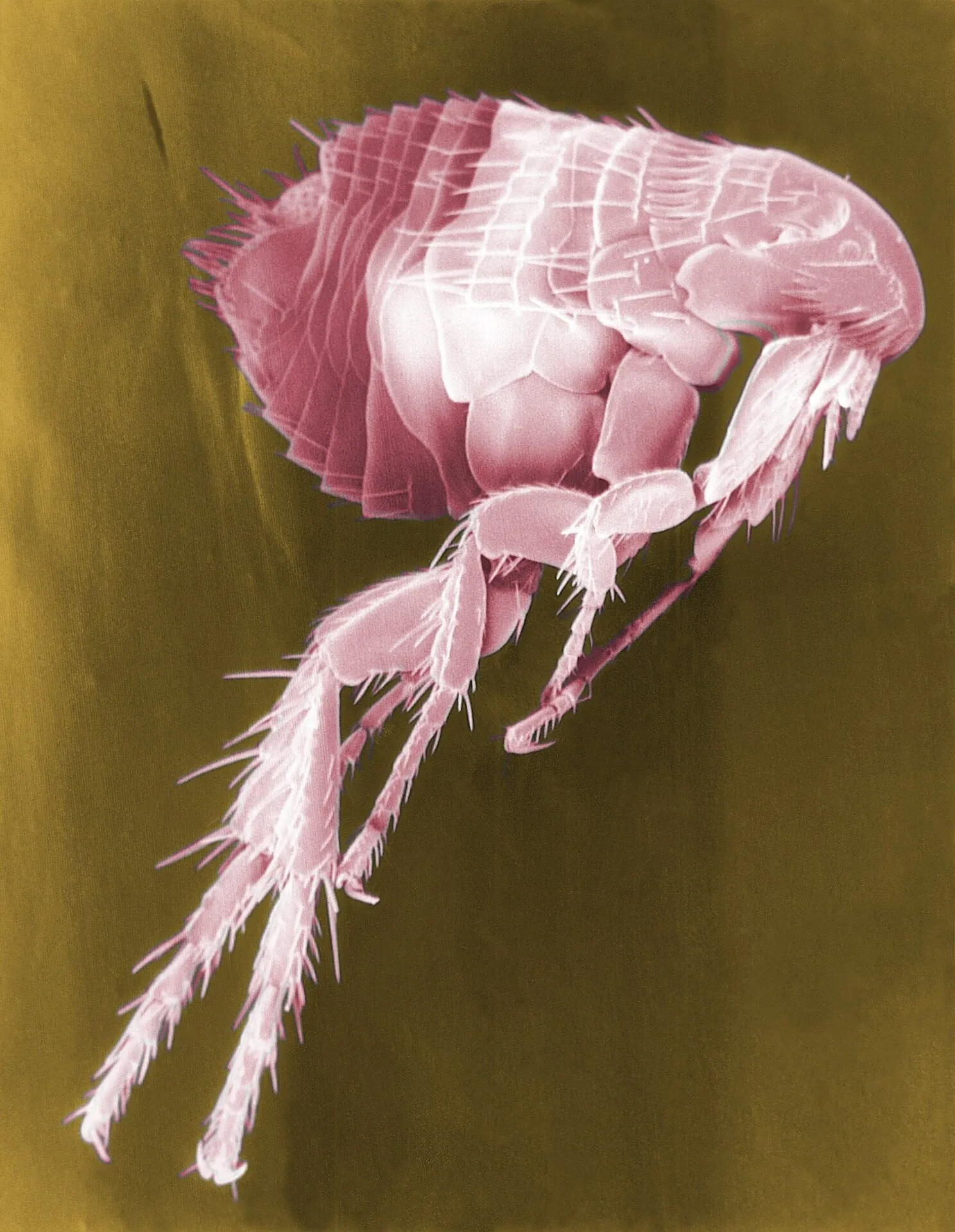
Fleas in the house are not solved by treating just the cat or just the carpet: you need to treat the pet and the home at the same time, then keep vacuuming for several weeks. That is the main reason treatments fail: fleas in the cocoon stage resist treatment and hatch one or two weeks later, which makes it look like “it didn’t work”.
Identifying fleas
Fleas measure 1 to 3 mm. They are reddish brown, flattened side to side, wingless, and jump remarkably far for their size. The most common on cats and dogs is the cat flea, which also bites dogs and people. A bed bug is larger, oval and cannot jump: if bites appear overnight, in a line, on the upper body, it is more likely a bed bug.
Signs of an infestation
- a pet scratching or chewing itself, especially on the lower back;
- tiny black specks in the fur that turn reddish on damp paper: flea droppings;
- clusters of bites on the ankles;
- small insects jumping onto white socks after a few steps on the carpet.
Why fleas come back
Adult fleas live on the animal, but their eggs drop wherever it lies down. Larvae develop in carpets, floor cracks and cushions, then spin a cocoon. Inside it, the flea is protected and can wait before hatching with the warmth and vibration of someone walking by. Hence three rules:
- treat the pet and the home on the same day;
- vacuum every day in the following weeks to make the remaining fleas hatch and capture them;
- do not wash treated floors before the stated delay.
Treatment, step by step
- Veterinarian: the right product for every animal in the house, not just the one scratching.
- Preparation: vacuum everywhere, hot-wash the pet’s bedding, clear the floors.
- Home treatment: where the pet sleeps, carpets, furniture bases, floor cracks.
- Follow-up: daily vacuuming and, if activity continues after a few weeks, a second visit.
Insecticide applied inside a home is a pesticide application: the applicator must hold a CD5 certificate from the Environment ministry. Ask for written instructions on when children and pets can return.
And with no pet in the house?
Flea bites with no cat or dog should make you think of wildlife living close by: squirrels or raccoons in the attic, a skunk under the deck. When the animal leaves, its fleas look for another host. The animal has to be excluded and its nest removed before treating.
What it costs
A Québec generalist publishes a rate of about $250 for flea treatment. Treating the pet at the vet is extra. Sources and other ranges are on the page about pest control prices.
Prevention
- Keep pets on a preventive product recommended by your veterinarian, especially from summer through fall.
- Wash their bedding regularly.
- Close attic and under-deck access to wildlife.
Ticks, which also latch onto pets, call for a different reflex: see their page if your dog comes back from the woods.
Frequently asked questions
Why do fleas come back two weeks after treatment?
Because fleas in the cocoon stage resist treatment. They stay in carpets, floors and furniture and hatch later, often triggered by the vibration and warmth of someone walking by. Vacuuming every day and keeping the pet treated makes those fleas emerge and die.
Should I treat the pet or the house?
Both, at the same time. Most eggs fall off the animal into the surroundings. Treating only the pet leaves thousands of eggs and larvae in the house; treating only the house leaves adult fleas on the pet. The veterinarian prescribes the right product for the animal.
Do cat fleas bite people?
Yes, mostly on the ankles and legs, but they do not live on people. Flea bites with no pet in the house point to wildlife in the attic or basement, or to a previous occupant's animal.
How should I prepare the house before treatment?
Vacuum everywhere, including under furniture, cushions and along baseboards, and throw the bag out outside. Wash the pet's bedding and throws in hot water. Clear the floors so treated areas are reachable, and follow the written instructions on when you can come back in.
My pet never goes outside. How did it get fleas?
Fleas can come in on another animal, on clothing, or from wildlife living in the attic, under the deck or in the basement. Squirrels or raccoons in the attic are a classic source.
Are over-the-counter products enough?
For the pet, ask your veterinarian: some dog products are dangerous for cats. For the house, daily vacuuming and hot-water washing often handle a small infestation if the pet is properly treated. A heavy infestation justifies professional treatment.
Next steps
Updated