Silverfish: fix the moisture before you treat
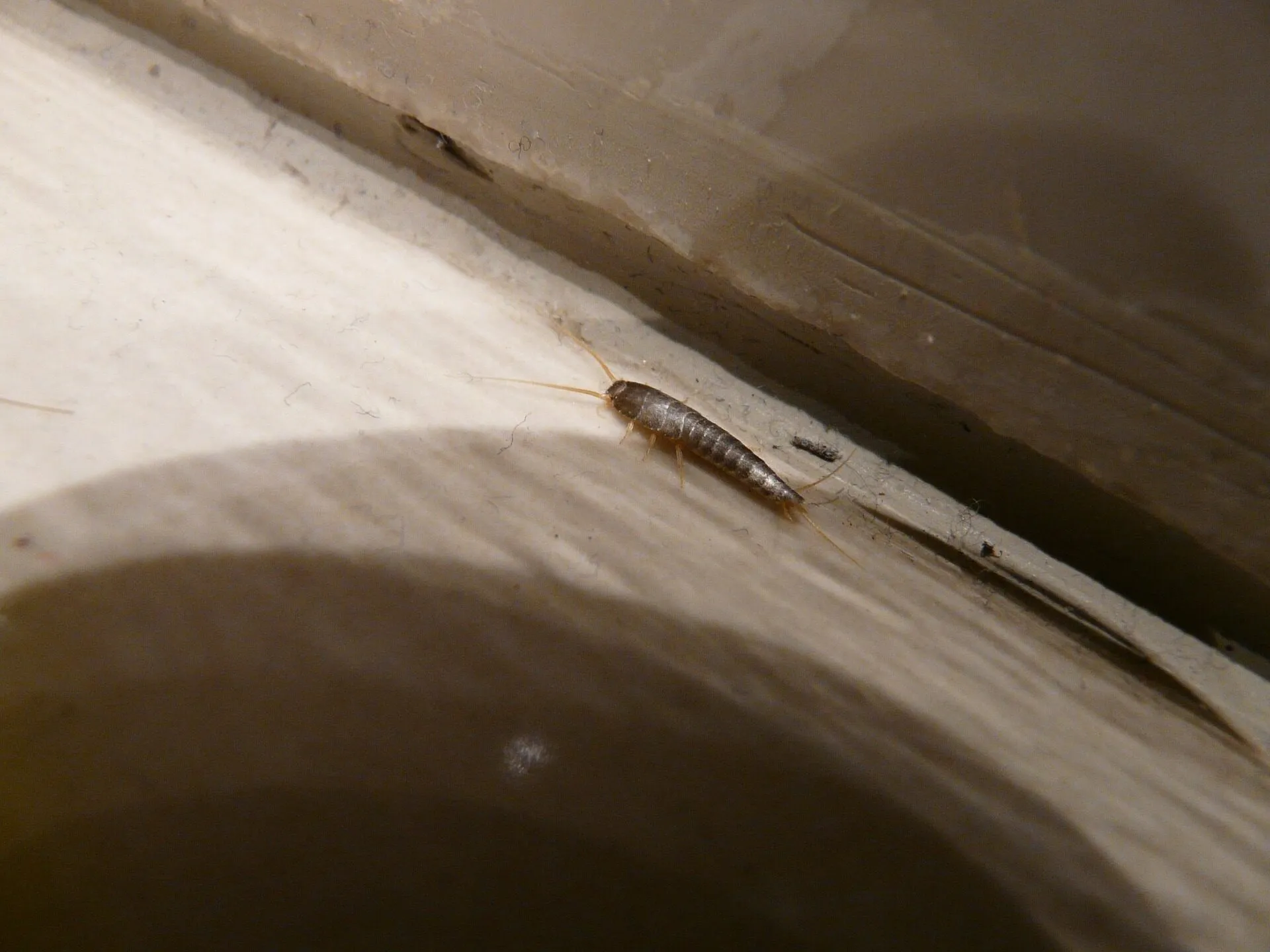
A silverfish darting under the baseboard when the bathroom light goes on is more a moisture indicator than a threat. It does not sting or spread disease, but it grazes on paper, cardboard, glue and dry food. The most effective treatment is often a dehumidifier; insecticide alone, without fixing moisture, leaves survivors.
Identifying silverfish
Silverfish measure about 10 to 15 mm without their filaments. Their teardrop-shaped body is covered in silvery scales, with three long filaments at the rear. They are nocturnal, fast and avoid light. Their cousin the firebrat, more mottled, prefers warm spots near a furnace or water heater.
Where they live in the house
- poorly ventilated bathrooms;
- damp basements, especially near foundation walls;
- cardboard boxes, books and stored papers;
- behind baseboards and under flooring;
- laundry rooms and cabinets under sinks.
What they damage
Silverfish feed on starch, cellulose and sugars: paper, cardboard, bookbinding glue, wallpaper, labels, flour, cereal. Archives, photos or books stored in cardboard boxes in the basement are the most exposed.
Fixing the problem, step by step
- Dehumidify the basement and check humidity with a hygrometer.
- Ventilate the bathroom: a working fan, run during and after showers.
- Store things in sealed plastic bins rather than cardboard.
- Fix leaks: pipes, faucets, tub caulking, foundation seepage.
- Seal gaps along baseboards and frames.
- Vacuum corners, baseboards and under furniture regularly.
And a treatment?
For an infestation established in walls, under a floor or in archives, a targeted treatment of cracks and baseboards is justified. Silverfish live long and breed slowly: results are measured over several weeks, and moisture must be corrected at the same time. Insecticide applied inside a home is a pesticide application: the applicator must hold a CD5 certificate from the Environment ministry.
What it costs
No recent range is published for the region. A dehumidifier often solves much of the problem before any treatment. Published ranges for other pests are on the page about pest control prices.
What moisture also attracts
A basement with silverfish often hosts sowbugs and house centipedes, which actually eat silverfish, along with spiders. In a kitchen, small insects in flour or cereal are more likely pantry moths. For an inspection that looks for the moisture source rather than the insect, see how a pest control job works. The problem turns up across the whole service area wherever a basement stays damp.
Frequently asked questions
Are silverfish dangerous?
No. They do not sting, bite or spread disease. The problem is material: paper, cardboard, books, bookbinding glue, wallpaper and dry food get grazed.
Why do they show up in the bathtub?
They look for moisture at night and slide down the smooth sides of the tub or sink, then cannot climb back out. They do not come from the drain.
What do silverfish eat?
Mostly starch and materials rich in cellulose or sugar: paper, cardboard, glue, wallpaper, flour, cereal. Cardboard boxes stored in a damp basement give them food and shelter at once.
Is a dehumidifier enough?
Often it solves much of the problem. Silverfish need humid air; a dried-out basement or bathroom becomes far less welcoming. Add a working bathroom fan and store things in plastic bins.
How long do they live?
Silverfish live a long time for an insect and breed slowly. That is why a small population can stay for years in a damp house without ever exploding, and why a treatment alone, without fixing moisture, often leaves a few survivors.
Is treatment necessary?
Not always. For a few silverfish, moisture control and storage changes are enough. For an established infestation in walls or archives, a targeted treatment of cracks and baseboards is justified. The applicator must hold a CD5 certificate.
Next steps
Related pests
- sowbugs and centipedes
- spiders
- pantry moths and carpet beetles
Updated