Earwigs: why they come inside and how to keep them out
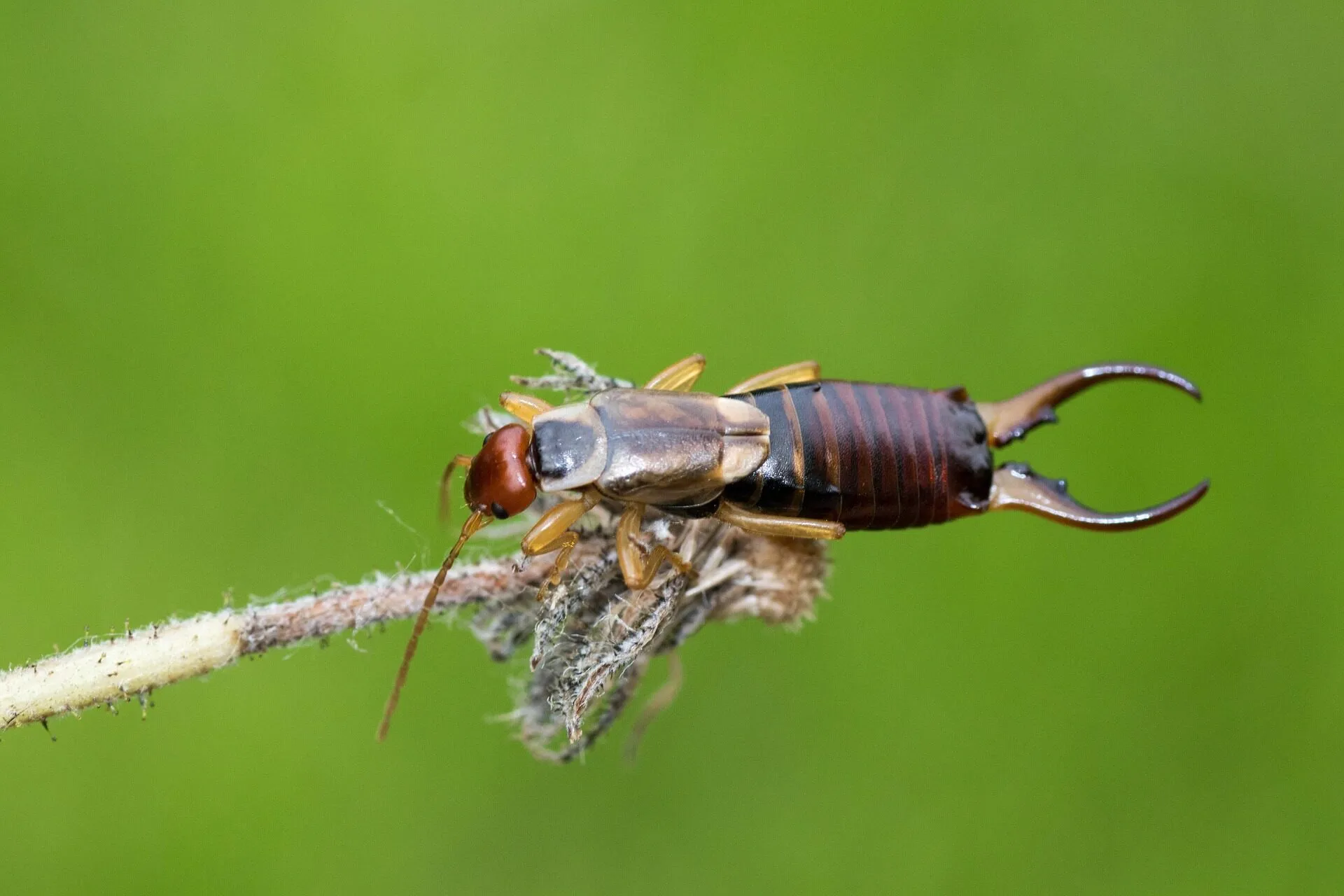
The earwig is scary for its name and pincers, but it is harmless: it does not sting, does not spread disease and does not crawl into ears. It becomes a nuisance when moisture and shelter sit right against the house. The fix starts with what surrounds the foundation, long before any insecticide.
Identifying the earwig
The European earwig measures about 12 to 20 mm including its pincers. It is reddish brown and elongated, with two pincers at the tip of the abdomen: curved on males, nearly straight on females. It is active at night and hides by day in narrow, dark, damp spots.
Why it comes inside
- Shelter against the foundation: thick mulch, dead leaves, firewood, decorative stones, pots.
- Moisture: overflowing gutters, downspouts dumping water against the house, poorly drained soil.
- Gaps: door sills, garage door bottoms, basement window frames.
- A weather shift: a very dry or very wet stretch that pushes it to look for better conditions.
What works
- Pull mulch back: keep a strip of at least 15 to 30 cm free of mulch and dense plants along the foundation.
- Manage water: clean gutters and direct downspouts away from the house.
- Seal sills, door sweeps and basement window frames.
- Trap in the garden: a damp rolled newspaper in the evening, shaken into soapy water in the morning.
- Vacuum the ones that got in: they do not breed well in a dry house.
- Dehumidify the basement if earwigs come back every summer.
And a treatment?
An exterior treatment around the foundation can sharply reduce their numbers for a season, for example on a house surrounded by mulched beds. It does not last if mulch and moisture stay against the walls. Insecticide applied around a house is a pesticide application: the applicator must hold a CD5 certificate from the Environment ministry, and you can ask which product will be used near the vegetable garden.
What it costs
A published range for Greater Montreal, which includes the South Shore, runs from $250 to $450 for an exterior treatment. Reducing damp mulch near the foundation helps as much as the treatment. Sources are on the pricing page.
The earwig’s neighbours
Where there are earwigs, there are often sowbugs and centipedes, and the spiders that hunt them: all point to the same moisture. Houses near water or on low ground, along the Richelieu in Saint-Jean-sur-Richelieu for example, are more exposed. The same sealing also cuts silverfish in the basement.
Frequently asked questions
Do earwigs crawl into ears?
That is a myth. Earwigs look for narrow, dark, damp places to hide during the day, but nothing shows they target ears. They are harmless to people.
Do earwigs sting or bite?
They do not sting or spread disease. When handled, an earwig may pinch with its pincers, which is harmless.
Why are there earwigs in my house?
Mostly moisture and shelter right against the foundation: thick mulch, leaves, wood, decorative stones. In very dry or very wet weather, they look for somewhere more comfortable and come in through gaps at doors, windows and sills.
Do earwigs damage the garden?
They sometimes nibble seedlings, petals and ripe fruit, especially when numerous. But they also eat aphids and decaying matter. In a balanced garden, they do about as much good as harm.
How do I trap earwigs?
A rolled, dampened newspaper or a cardboard tube set near plants in the evening becomes a hiding place: shake it into a bucket of soapy water in the morning. A small container with a little vegetable oil sunk level with the soil also works.
Is an exterior treatment useful?
It can cut earwigs around the foundation for a season when they are very numerous. Without reducing mulch and moisture against the house, they come back. The applicator must hold a CD5 certificate.
Next steps
Related pests
Updated