Why are there so many carpenter ants at the foot of Mont Saint-Bruno?
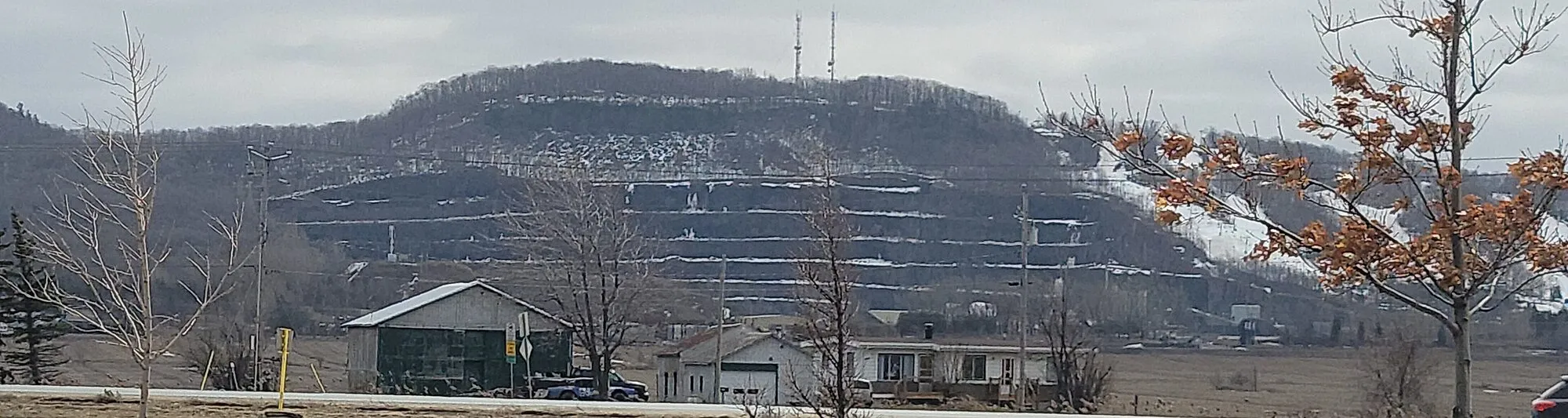

Because the forest is a few steps from the houses. In Saint-Bruno-de-Montarville, several neighbourhoods back onto Mont Saint-Bruno and Mont-Saint-Bruno National Park. Dead wood, stumps and the moisture of the woods feed large carpenter ant colonies, which then send satellite nests into the nearest house. The good news: you do not treat the forest, you protect the house.
How it works: a colony outside, satellites inside
Carpenter ants do not eat wood. They dig galleries in it to house the colony, and they choose wood already softened by moisture: a dead tree, a stump, a log on the ground. A mature colony can then set up satellite nests elsewhere, often in a warm, damp spot in a nearby house:
- wood around a leaking window;
- a patio door sill;
- a deck joist close to the ground;
- a bathroom or kitchen wall;
- a soffit under branches that hold water.
Workers travel at night between the main nest and the satellites, often along branches, fences or wires.
What makes Saint-Bruno different
On most suburban lots, a colony finds little dead wood. At the foot of the mountain, it is the opposite: the forest supplies it constantly. Three consequences for homeowners:
- The main nest is often off your property. It may be in the neighbouring woods, where you cannot and should not intervene.
- Reinfestation is more likely. Once a satellite is eliminated, other colonies from the woods may try the same house if conditions stay the same.
- Prevention matters more than treatment. Making the house less attractive is what lasts.
Signs to watch for
| Sign | What it means |
|---|---|
| Big black ants outdoors in summer | Normal foraging; nest probably in the woods or yard |
| Ants indoors in spring | Likely satellite nest in the house |
| Winged ants inside the house | Mature nest in the structure, almost certainly |
| Fine sawdust under a baseboard, window or sill | Active galleries in the wood |
| Faint rustling in a wall at night | Active colony at that spot |
Protecting the house, step by step
- Create a buffer zone: keep firewood, stumps and logs at least a few metres from the house, and never stack them against the foundation.
- Trim branches that touch the roof or walls: they are direct bridges.
- Deal with moisture: clean gutters, extended downspouts, sealed windows and sills, rotten wood replaced.
- Watch in spring: that is when satellites become visible.
- Have it inspected if you see ants indoors in spring, or sawdust appears.
What a treatment should cover
The full protocol is on the carpenter ants page. At the foot of the mountain, a serious quote should state:
- where the nest is, or at least where it was looked for: house, yard, edge of the woods;
- how satellites in the structure are treated, with injection areas;
- what is recommended for the cause: rotten wood, branches, moisture;
- the guarantee or follow-up if activity returns the next season.
An injection into a wall is a pesticide application: the applicator must hold a CD5 certificate from the Environment ministry. No treatment happens in the national park: protection targets your lot and your building.
Other issues from the same woods
The wooded areas of the mountain are also habitat for the blacklegged tick: if you garden or walk at the edge of the woods, see the page on ticks. Big trees and sheds also multiply the spots for wasp nests.
The full town profile is on the Saint-Bruno-de-Montarville page, and published price ranges are on the pricing page.