Sowbugs and centipedes in the basement: a moisture problem
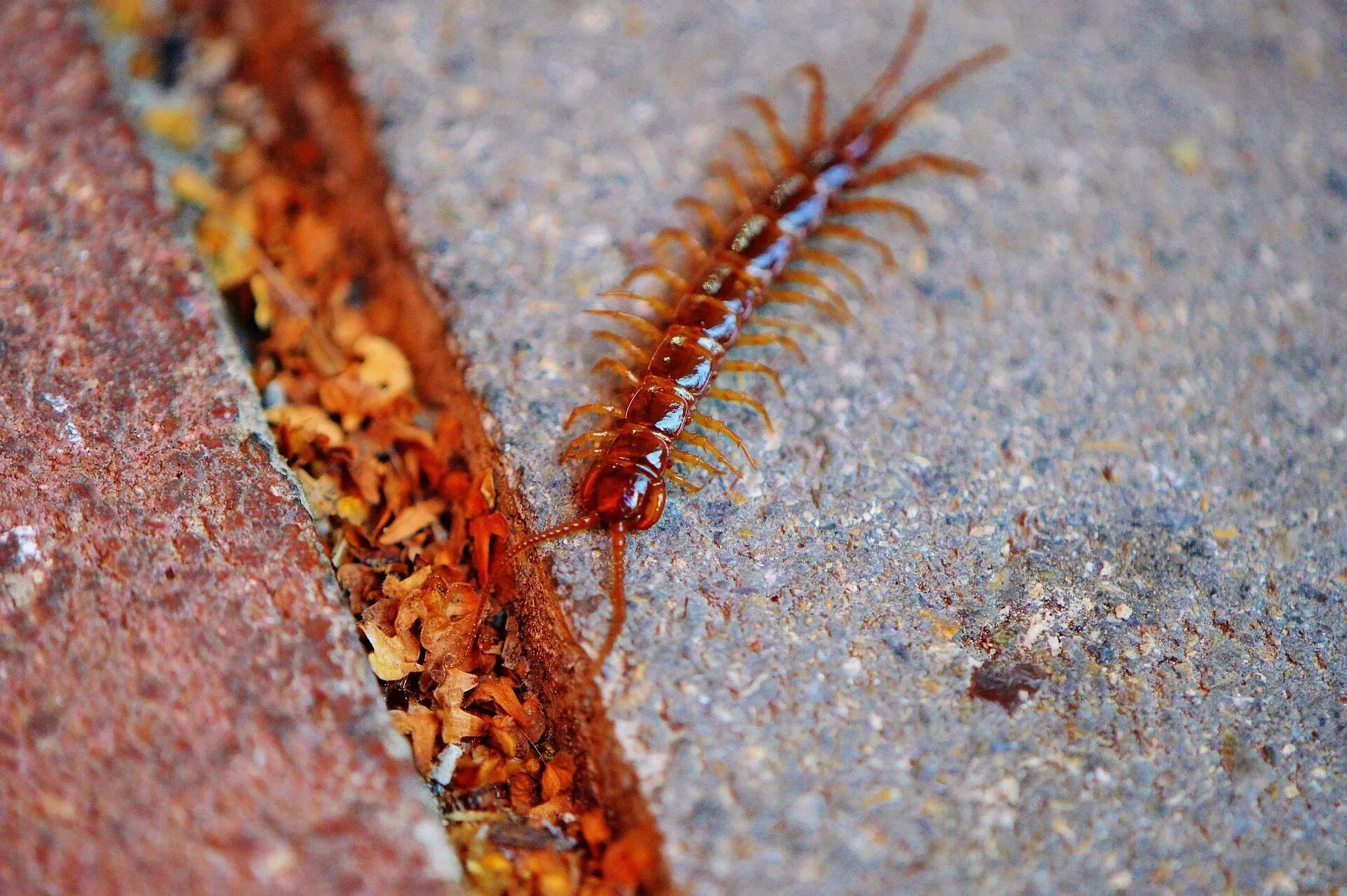
Sowbugs, house centipedes or millipedes in the basement all say the same thing: there is moisture. None of the three harms the house, and none settles for long in a dry basement. The lasting fix is correcting moisture and pulling mulch away from the foundation; treatment only comes as a complement.
Three different animals
| Sowbug | House centipede | Millipede | |
|---|---|---|---|
| Group | crustacean | centipede | millipede |
| Look | grey, domed plated back, sometimes rolls into a ball | 15 pairs of very long legs, very fast | cylindrical, brown, two pairs of legs per segment, curls up |
| Diet | decaying plant matter | hunts insects and spiders | decaying plant matter |
| Indoors | dies quickly in dry air | can live in a damp basement | dies quickly in dry air |
The house centipede: a predator
The house centipede hunts silverfish, spiders, cockroaches and other insects. It may bite if grabbed, which is harmless for the vast majority of people. In numbers, it signals that a damp basement is feeding plenty of prey: see the page on silverfish.
Why they come inside
- Thick mulch, leaves and wood against the foundation, keeping soil damp.
- Overflowing gutters and downspouts dumping water near the walls.
- Ground sloping toward the house.
- Gaps: patio door sills, basement window wells, foundation cracks.
- A damp basement: seepage, condensation, no dehumidifier.
Fixing the problem, step by step
- Dehumidify the basement and check the humidity level.
- Pull mulch and leaves back from the foundation, over a strip of at least 15 to 30 cm.
- Clean gutters and extend downspouts away from the house.
- Seal sills, window wells and accessible cracks.
- Vacuum the ones inside: sowbugs and millipedes die quickly in dry air.
- Have the foundation checked if invasions keep happening in the same spot.
And a treatment?
An exterior perimeter treatment around the foundation can sharply cut invasions when they are massive every year. Interior treatment is rarely useful as a first step. Insecticide applied around a house is a pesticide application: the applicator must hold a CD5 certificate from the Environment ministry.
What it costs
A published range for Greater Montreal, which includes the South Shore, runs from $250 to $450 for sowbug treatment. Sources are on the page with price ranges.
Same causes, same neighbours
Earwigs come in through the same sills for the same reasons, and spiders follow their prey. Houses on low ground or near water, such as along the Châteauguay River in Châteauguay, see these fall invasions more often. For an inspection focused on moisture, see how a pest control job works.
Frequently asked questions
Is the house centipede dangerous?
Not for the vast majority of people. It may bite if grabbed, with pain comparable to a small sting. It hunts other household insects, including silverfish, spiders and cockroaches. Large numbers mostly point to moisture and prey.
Why do sowbugs die inside the house?
The sowbug is a crustacean: it needs moisture to breathe. In a dry house, it dehydrates and dies quickly. If it survives and multiplies in the basement, the basement is damp.
Why are there millipedes in the basement in the fall?
Millipedes live in mulch, leaves and damp soil. After heavy rain or in early fall, they sometimes move in large numbers and come in through sills and foundation cracks. They die quickly indoors if the air is dry.
Should the inside be treated?
Rarely as a first step. Dehumidifying, sealing and pulling mulch away from the foundation solve most cases. An exterior perimeter treatment is justified when large invasions happen every year.
What draws them to the house?
Thick mulch, dead leaves, firewood and stones against the foundation, overflowing gutters and downspouts dumping water near the walls. Anything that keeps soil damp and dark along the house.
Is it a sign of a foundation problem?
Not necessarily, but it is a good reason to check: cracks, seepage, the weeping tile, ground sloping toward the house. Many sowbugs and centipedes every year in the same spot often point to a specific moisture source.
Next steps
Related pests
Updated